Midtown Athletic Club’s Chicago Location Fired All of Its Housekeepers, Twice
The luxury Midtown Athletic Club in Chicago told its housekeepers they would be laid off on May 1. The workers saw the move as retaliation for their organizing efforts — and when they went public, the club fired them again, effective immediately.
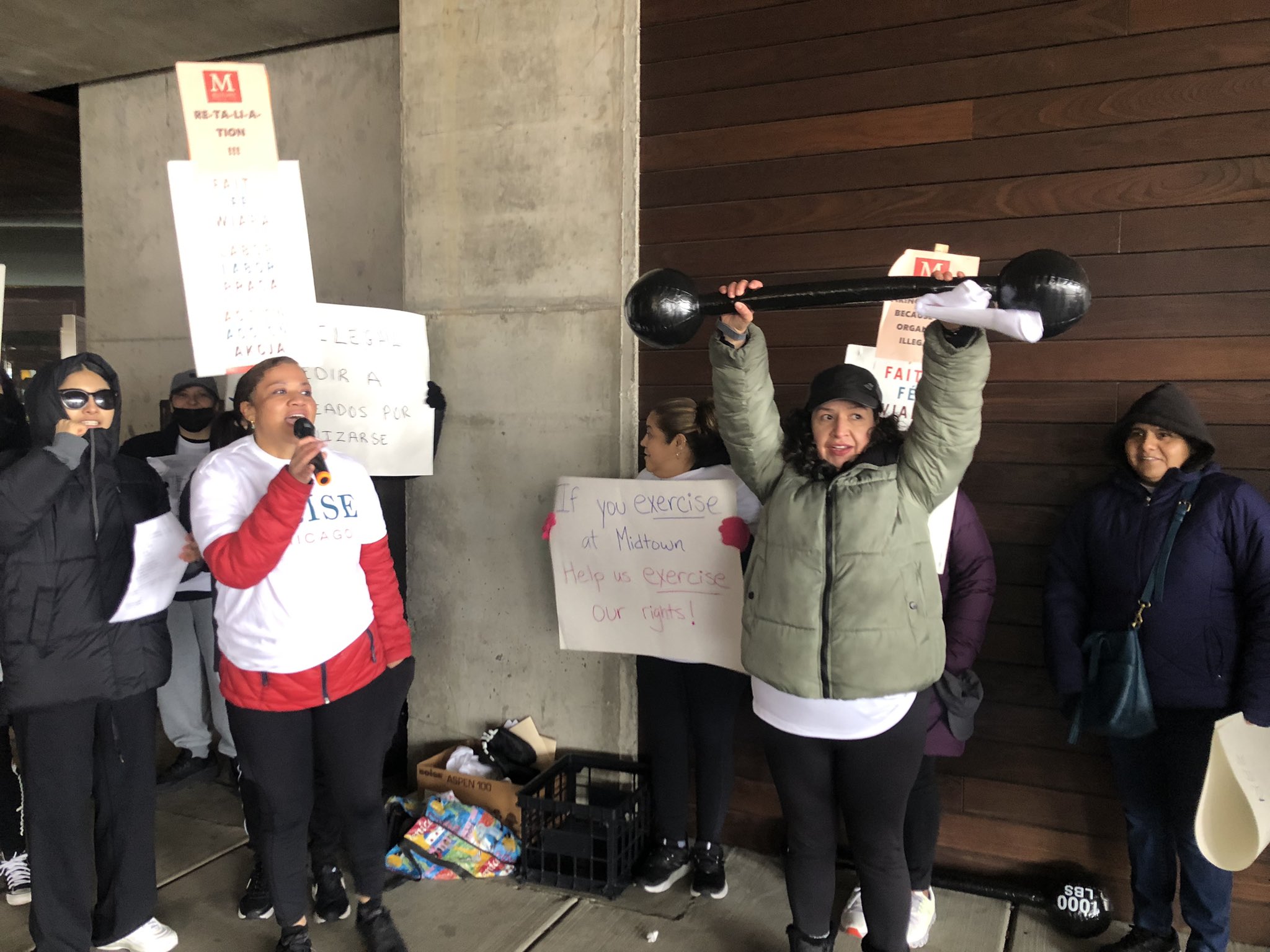
Midtown Athletic Club housekeepers demonstrating in Chicago, April 1, 2023. (Arise Chicago via Twitter)
On March 23, nonunionized housekeepers at the Midtown Athletic Club in Chicago received a message from management with the subject title: “Change in the Housekeeping Structure.” The letter said that effective May 1, the luxury gym, which includes a tennis club designed by Venus Williams, would begin using an outside contractor for its cleaning needs. The thirty-eight housekeepers would be laid off. While the workers were told they were welcome to apply for positions with the third party, “whether they hire you is up to them.”
The letter noted that a few other Midtown clubs across the country use an outside contractor for housekeeping services, but the Chicago workers saw the move as retaliation: they had been raising concerns about the club’s lack of protective equipment and cleaning supplies for months, and internally pushing for better staffing for more than a year. It also came mere days after the Chicago location’s maintenance staff and porters voted to unionize with the International Union of Operating Engineers Local 399. The housekeepers say that the club, which currently charges $259 a month for an individual membership (plus a $350 joining fee) and paid its housekeepers $16 to $17 an hour, did not rectify the issues. So, in the fall of 2022, they went to Arise Chicago, a workers’ center, with their concerns.
“There was a lack of both towels and the personnel to keep them clean,” says Monica Vargas, who has worked at Midtown Athletic Club for a year and a half. She says the club lacked biohazard bins for bloody towels, and that she and her fellow workers were always short on protective equipment in general and garbage bags and high-quality gloves in particular. “They didn’t have dedicated bins for disposal of sharps — some members of the clubs would use injectable medications, so they’d dispose of them in the garbage and the staff would on occasion stab themselves with them.”