Netflix’s Maid Offers a Rare Portrayal of Low-Wage Domestic Work
Adeptly exploring the compound effects of low-wage work, unsupported parenthood, and our broken social support system, Maid rings true for millions of working-class women.
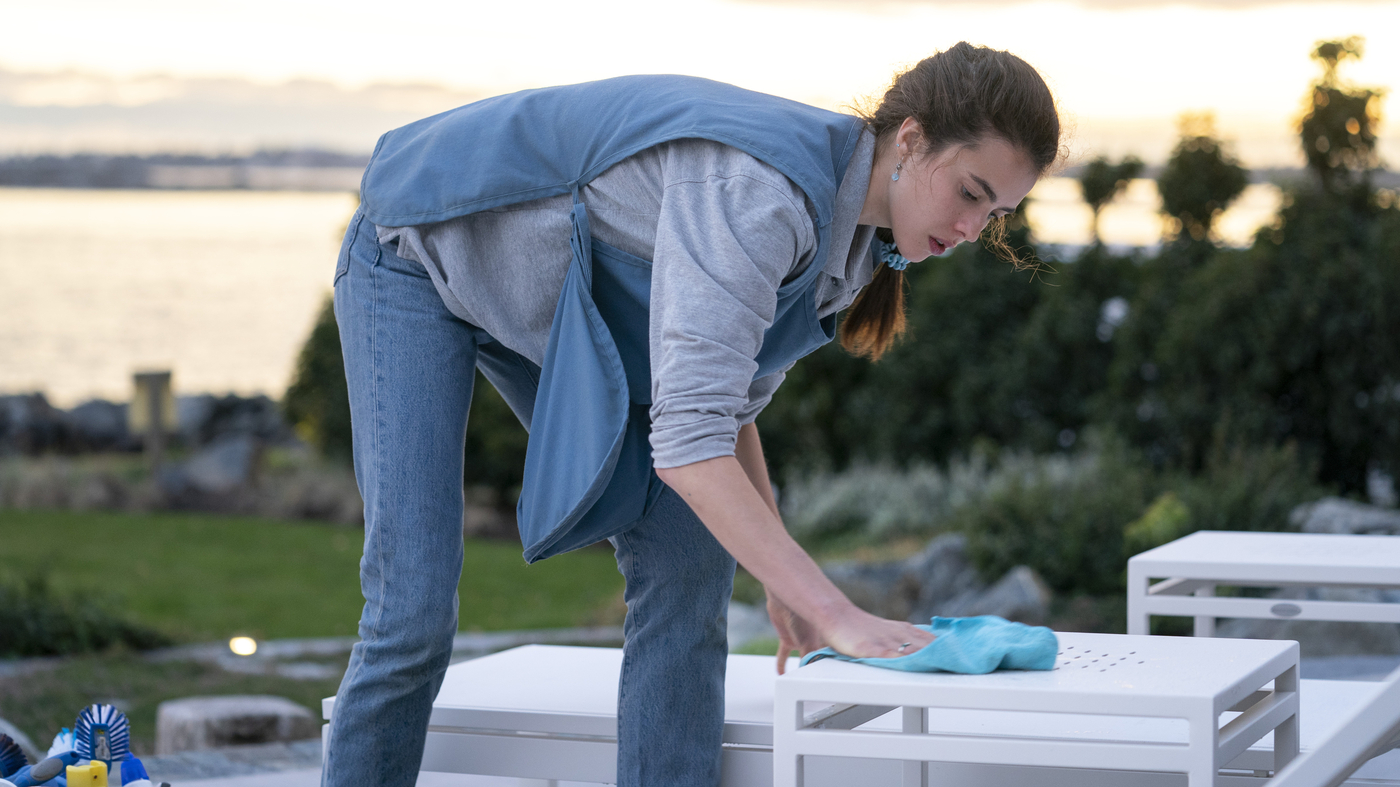
In Maid, Margaret Qualley plays Alex, a single mother working as a house cleaner. (Ricardo Hubbs / Netflix)
In the United States, more than two million people, mostly women, clean and care for the sick, elderly, and young in the homes of others. Their median pay is $12 an hour, and only one in five domestic workers have employer-provided health care. It’s extremely rare for them to have other benefits like retirement or paid time off, and they are excluded from most labor laws, leaving them more vulnerable to exploitation and abuse. Just over half of all domestic workers are people of color, and 35 percent are immigrants.
Domestic work is “the work that makes work possible.” But the women who perform it are basically invisible, their stories seldom told. They rarely appear in movies and on television even as background characters; the homes on TV are magically, spotlessly clean. Thus, it’s notable that Stephanie Land’s book Maid: Hard Work, Low Pay and a Mother’s Will to Survive was made into a new Netflix miniseries — and a popular one at that, with Maid clocking in at number three on Netflix last week.
Maid is a rare piece of entertainment foregrounding domestic work, but its scope is even bigger. Its true focus is on the nearly unbreakable loop of poverty, homelessness, addiction, domestic violence, and mental health issues. Based on Land’s real life, the show follows Alex and her toddler, Maddy, as they work to escape Maddy’s father, Sean, an emotionally abusive alcoholic.