Britain’s Junior Doctors’ Strike Is About Putting an End to Austerity
More than a decade of cuts under the Conservatives has left Britain’s National Health Service dangerously understaffed and underfunded. After years of pay cuts, junior doctors are fighting back to protect patients and the NHS.
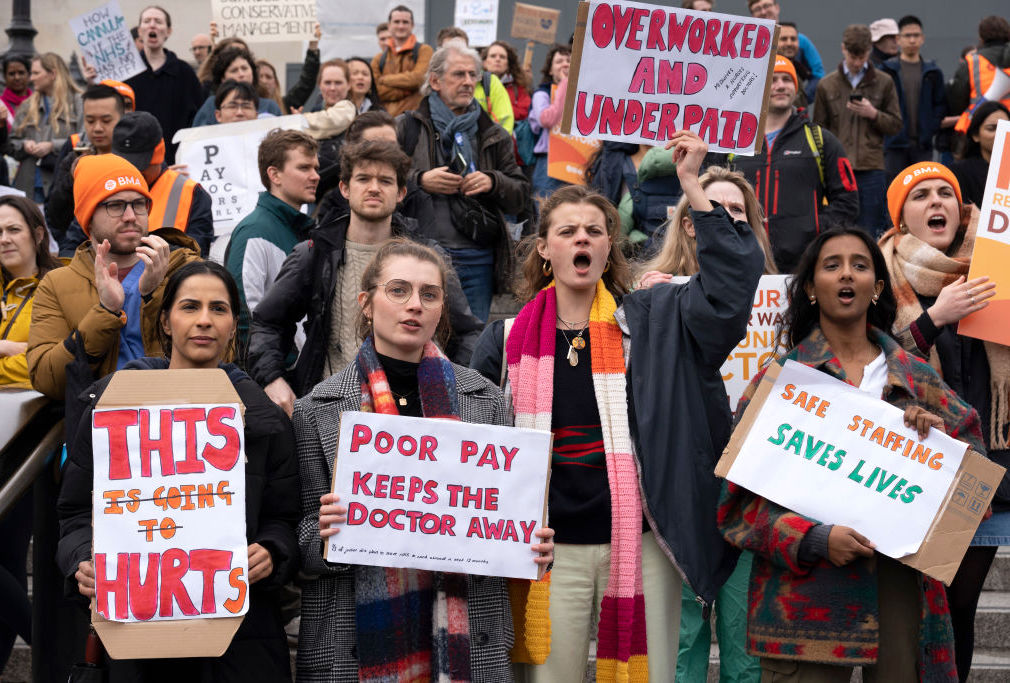
On the first of their four-day nationwide industrial action, striking junior doctors rally in Trafalgar Square on April 11, 2023, in London, England. (Richard Baker / In Pictures via Getty Images)
Junior doctors like me working in England’s National Health Service (NHS) have made the agonizing decision to strike this week for a simple reason: the worsening of conditions within Britain’s state-run health care provider has meant that professionals and patients alike are not safe. Both are suffering as a result of incessant, relentless real-term pay cuts for junior doctors.
Like the 98 percent of doctors who voted for strike action, I will also be striking — for my colleagues, for my patients, and to save a wounded NHS. Our pleas to the government are simple: pay restoration is rational, not radical.
The NHS ought to be celebrated. It’s a national treasure, deeply woven into the fabric of British society. Even Margaret Thatcher, who once described the NHS as a “monolith of socialism,” left the institution mostly intact during her eleven years at the helm of the Conservative Party, during which she embarked on an attack on public services and trade unions.