The US Has a Homegrown Model for a Better Health Care System
The National Health Service Corps has been placing primary care providers in working-class communities since 1972, though few have heard of it. We need to not only scale up the program but consider it a model for a health care system that puts people over profit.
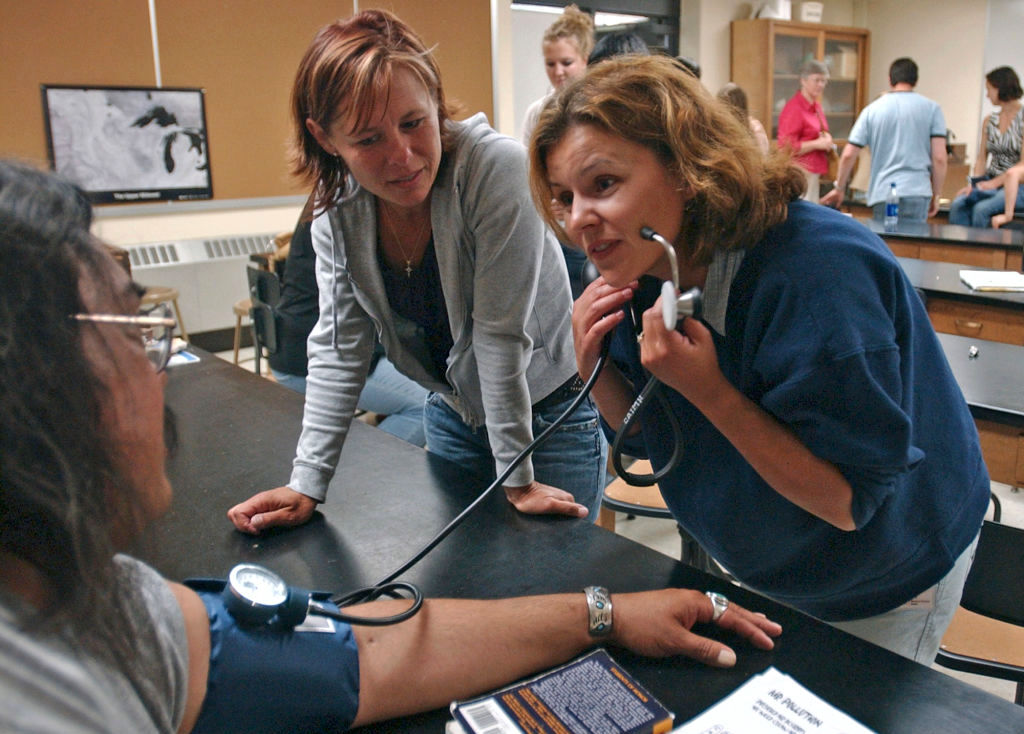
Two nursing students take the blood pressure of a patient in a clinic in Duluth, Minnesota. (Joey Mcleister / Star Tribune via Getty Images)
A recent exposé in the Los Angeles Times brings to light the horrific increase in amputations in majority-black, working-class South Los Angeles. After decades without access to health-promoting infrastructure like supermarkets, parks, and doctors, diabetic residents are losing their toes, feet, and legs.
Nightmare scenarios like these owe in part to the nation’s shortage of primary care physicians, which has made it nearly impossible for people to obtain preventive services or to secure an appointment with their provider quickly enough to receive the specialty care that might have enabled them to keep their limbs.
Thankfully, we’re beginning to see more investment in addressing the nation’s primary care shortage. In March of 2021, when he signed the American Rescue Plan, President Biden directed $1 billion to a program called the National Health Service Corps (NHSC). Not many people know about the NHSC, even though it’s been around since 1972. The NHSC commissions medical, nursing, dental, nurse practitioner, and physician assistant students to practice primary care in designated underserved areas, both rural and urban. In return, NHSC recipients receive student loan reimbursement or financial assistance to pay for college.