Beef Is a Portrait of Our All-American Rage
Beef tells the story of a chance road-rage encounter that blossoms into a modern feud. Director Lee Sung Jin says it’s about “how hard it is to be alive,” but the show’s cross-class fantasy logic points at the powder keg of growing alienation in our society.
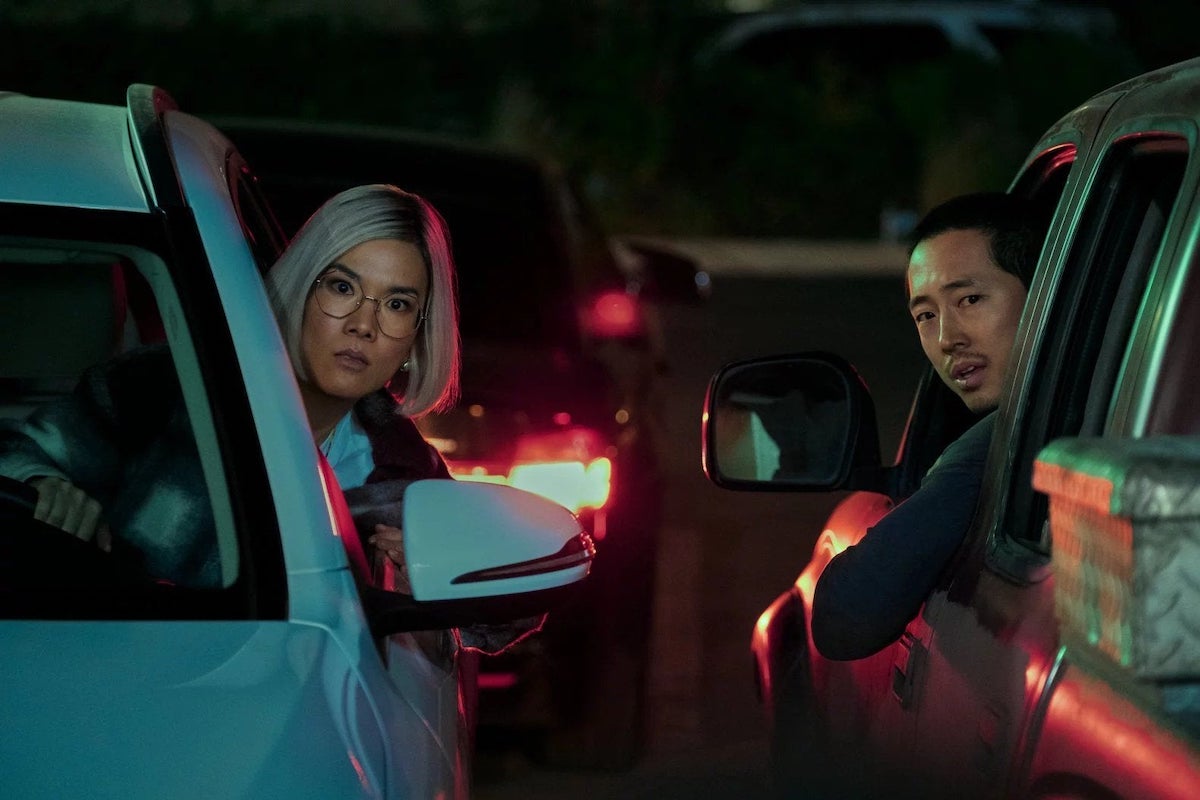
In Beef, growing alienation erupts in a chance encounter between strangers. (Netflix)
Beef, A24’s new ten-episode Netflix dramedy, has plenty going for it. The premise is compelling, featuring two charismatic leads, Steven Yeun (Minari, The Walking Dead) as financially strapped contractor Danny Cho and Ali Wong (Always Be My Maybe) as rich, type A entrepreneur Amy Lau, locked in an escalating feud after getting embroiled in a Los Angeles road-rage incident.
It seems right that this incident doesn’t even amount to a fender bender — there’s no collision, however slight, between Danny’s overloaded old red pickup truck and Amy’s gleaming white SUV. Distracted by his own misery, Danny tries to back out of a parking space and is honked at with blaring aggression by Amy, as yet unseen behind tinted windows. She flips him off, he tries to chase her down in typically hair-raising LA traffic, and that’s the start of the whole insane rigamarole. It’s a good way to illustrate the way people live now, in such a boiling cauldron of pressure and disparagement that we’re all ready to pop off at the slightest diss.
Initially, class seems like the focus of the antagonism. Certainly, I was Team Danny all the way, because after all, who has plenty of money to soften every rough edge of this god-awful world made of nothing but rough edges? Not Danny.