Public Education Is Vital for Democracy. But It’s Not the Solution to Poverty or Inequality.
The bipartisan obsession with schooling as an investment in “human capital” in the US since the 1970s has fostered a highly unequal society. We need wide-ranging redistribution to tackle inequality — and to defend public education against right-wing backlash.
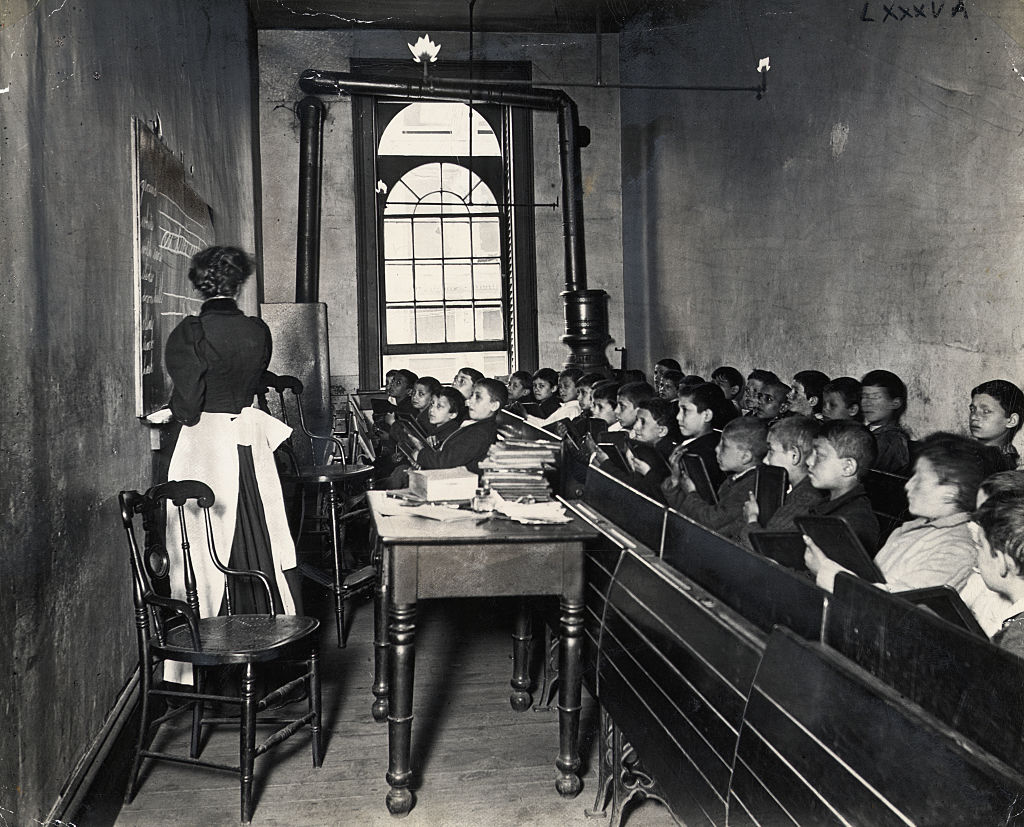
A New York City schoolroom, circa 1886. (Bettmann / Getty Images)
“I love the poorly educated,” Donald Trump told supporters in Nevada after they helped him notch a decisive win in the state’s 2016 Republican caucuses. The line was typical: dashed off, casually cruel, instantly divisive. And it instantly distinguished Trump from his competitors in both parties. He wasn’t promising his supporters a brighter future, but only if they got more education or retrained for a better job. There was no talk here of “access,” “opportunity,” or “human capital.” Instead, Trump was trashing yet another political norm: the bipartisan consensus, stretching back a half century, that the solution to economic inequality is more and better education.
In his important and timely new book, The Education Myth: How Human Capital Trumped Social Democracy, Jon Shelton chronicles the evolution of that belief, long elevated to the status of common sense. It’s the story of how political elites fell in love with an idea, abandoning a redistributive agenda in favor of education. The result, argues Shelton, has been ever-widening economic inequality and a stark political divide.
Mythmaking
It’s almost impossible to imagine now, but there was a time when Americans did not hear the words “public education” and automatically think about individual economic opportunity. As Shelton chronicles in his brisk history, public education was understood as the essential tool for helping citizens participate in a new democracy up through the nineteenth century. And when working people confronted massive inequality in the era of industrialization, they responded, not by demanding more education, but by organizing unions and by supporting stricter curbs on capitalism’s excesses.