Three New Books by Former Soldiers That the US Military Doesn’t Want You to Read
Several new memoirs from disillusioned military veterans reflect on the horrors of war. They’re essential tools for challenging US empire.
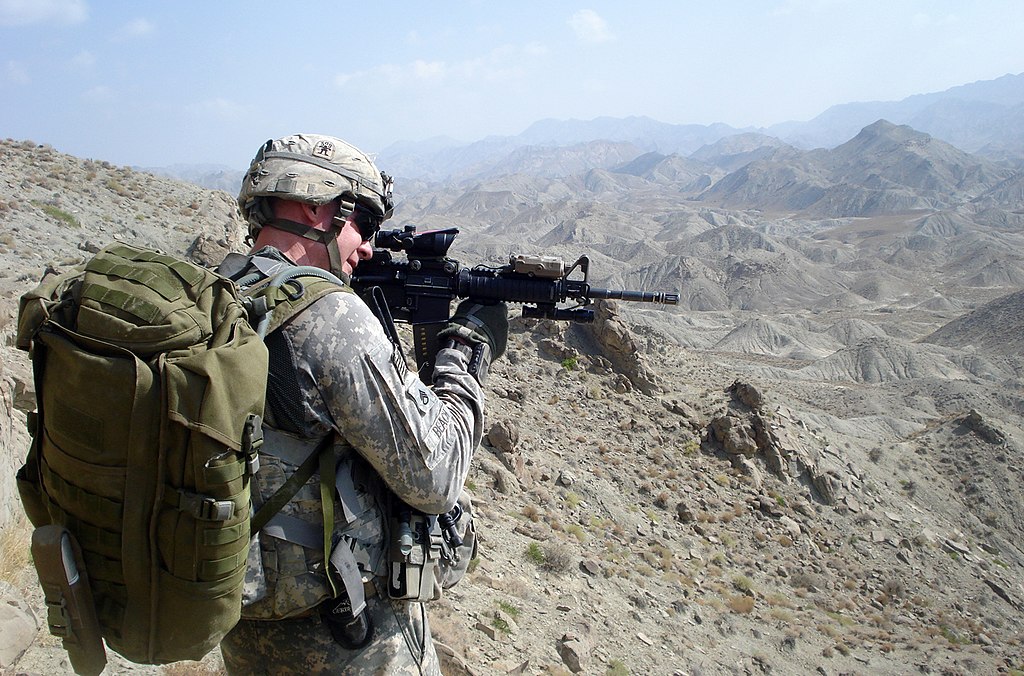
A US infantry soldier sweeps the mountains during a patrol in the Paktika Province in eastern Afghanistan. September 23, 2009. (PFC Andrya Hill / United States Army via Wikimedia Commons)
One frequent casualty of war is the confident belief shared by new soldiers that their cause is just and worthy of great personal sacrifice. After Al-Qaeda downed four civilian airliners and caused nearly three thousand deaths on September 11, 2001, US military recruiters were flooded with eager volunteers. Patriotic fervor, coupled with an urge for revenge and a desire to make the world a safer place, motivated many young men and women to enlist.
As the reality of simultaneous interventions in Iraq and Afghanistan began to sink in, many participants — like Vietnam veterans before them — became angry, embittered, and disillusioned. Some of them have turned to memoir-writing that debunks the whole costly and disastrous $8 trillion project known as the “global war on terror.” Three excellent new book-length reflections on military training, socialization, and combat duty in the Middle East definitely won’t end up on the reading lists of college-level or junior ROTC programs, or even the US service academies.
But many civilian readers will benefit from the policy critiques and personal insights found in Erik Edstrom’s Un-American; Lyle Jeremy Rubin’s Pain Is Weakness Leaving the Body; and Paths of Dissent, an edited collection compiled by Andrew Bacevich and Daniel A. Sjursen, both of whom became historians after serving as career Army officers.