Loblaws Is Crushing Canadians With High Food Prices — While Raking in Enormous Profits
“Let them eat price gouging” appears to be grocery giant Loblaws’ response to the rising number of food-insecure Canadians. The company blames supply chain issues and inflation for soaring grocery costs — yet is posting stratospheric profits.
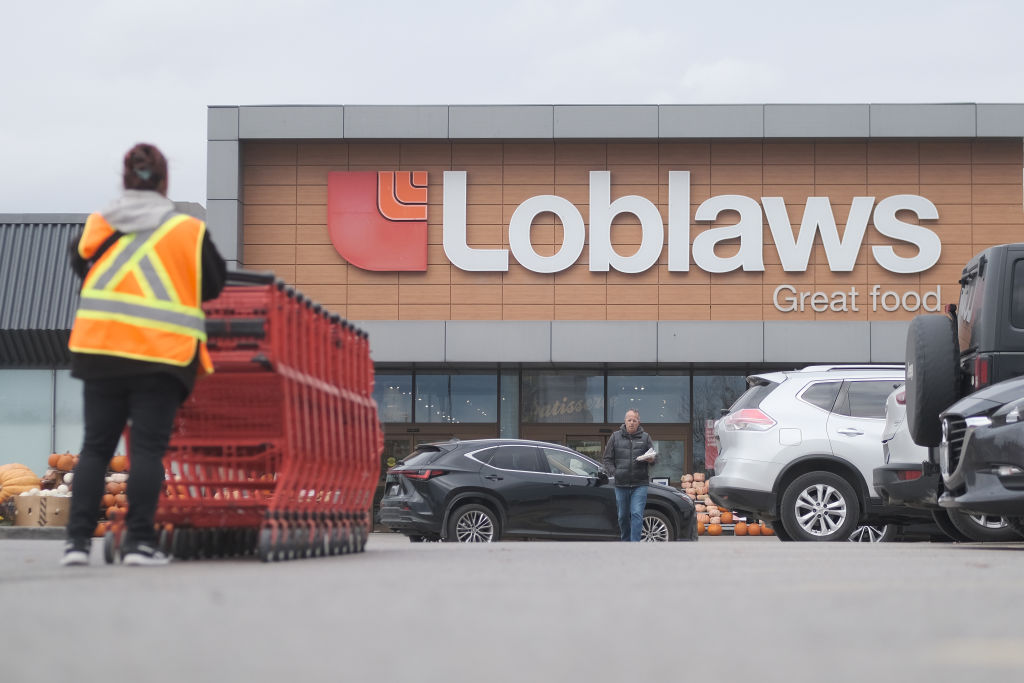
With businesses like these, who needs racketeers? (R. J. Johnston / Toronto Star via Getty Images)
You’re probably not alone if “La Marseillaise” plays in your head every time you go grocery shopping. Food inflation costs are crushing Canadians, adding to and exacerbating overlapping and intersecting affordability woes from housing to transit to health and beyond. The list of culprits is vast, but in the grocery sector, Loblaws has become the poster child for corporate greed. Now, after ending its three-month price freeze on its No Name products, the company is on what one might generously call a public relations blitz — trying to explain soaring prices as a result of food inflation being a “global issue.”
Taking to Twitter, the company spent time replying to users, arguing that grocery margins are low and costs are rising because suppliers are raising their prices. There aren’t enough tiny violins in the world. The effort was cringeworthy — especially in light of reports revealing that global food costs have declined by 18 percent since their record high in March of last year.
In 2021, nearly 16 percent of Canadian households were food-insecure. As PROOF, an interdisciplinary research program studying food insecurity and policy at the University of Toronto, notes, that means nearly 6 million Canadians, and 1.4 million children, faced varying degrees of food insecurity. In the same year, over half of households found to be food-insecure “reported their main source of income as wages, salaries, or self-employment,” notes the report. The data also suggests that people who rent, have children under eighteen, or are indigenous or racialized also face higher rates of food insecurity. Food-security advocates are anticipating a rise of 60 percent in the number of Canadians accessing food banks in 2023.