The Speaker Vote Made Republicans Look Weak, but That Won’t Last
Republicans don’t have enough power to pass anything on their own. But they still have plenty of power to cause chaos and, depending on how Democrats react, force terrible budget cuts on the country.
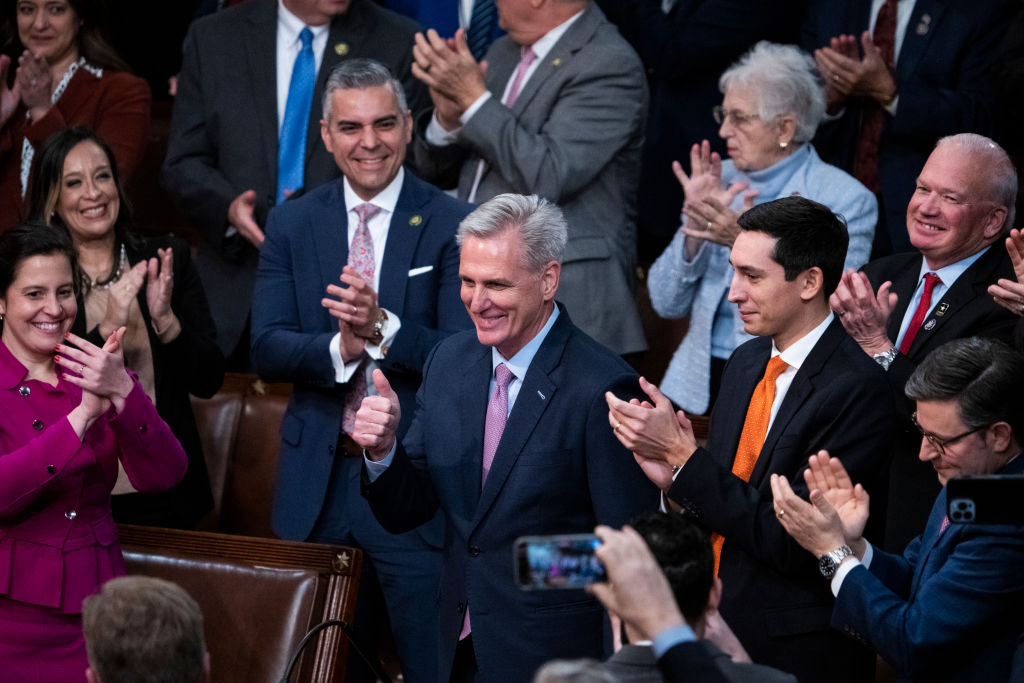
Speaker of the House Kevin McCarthy is seen after he won the speakership on the fifteenth ballot on Saturday, January 7, 2023. (Tom Williams / CQ-Roll Call, Inc via Getty Images)
After spending the week giving progressively more concessions to a caucus of right-wing lawmakers centered around Florida representative Matt Gaetz, Kevin McCarthy was finally elected Speaker of the House in the early hours Saturday. It took fifteen ballots.
While such negotiations and concessions (if not this many votes) are common in many other multiparty democracies, they’re rare in modern US history — all the more so because the two opposing sides were in the same party. Rarer still is the chance to see so much of it play out in public.
The spectacle left elected Republicans looking divided, at least in the short term. It took less than 10 percent of the House Republican caucus to utterly humiliate McCarthy. Noted extremists like Marjorie Taylor Greene and Donald Trump supported McCarthy from the beginning, but that still wasn’t enough to satisfy an even more aggressive minority of the caucus. With a very slim majority over Democrats, and with Republicans practically coming to blows with one another on the House floor, Kevin McCarthy is set to be a historically weak Speaker of the House.