How C. L. R. James Helped End the Racial Hierarchy of West Indies Cricket
No matter how well black West Indies cricketers played before 1960, they never made captain. When the political winds changed, Trinidadian Marxist intellectual C. L. R. James threw himself into the campaign to transform both the sport and popular consciousness.
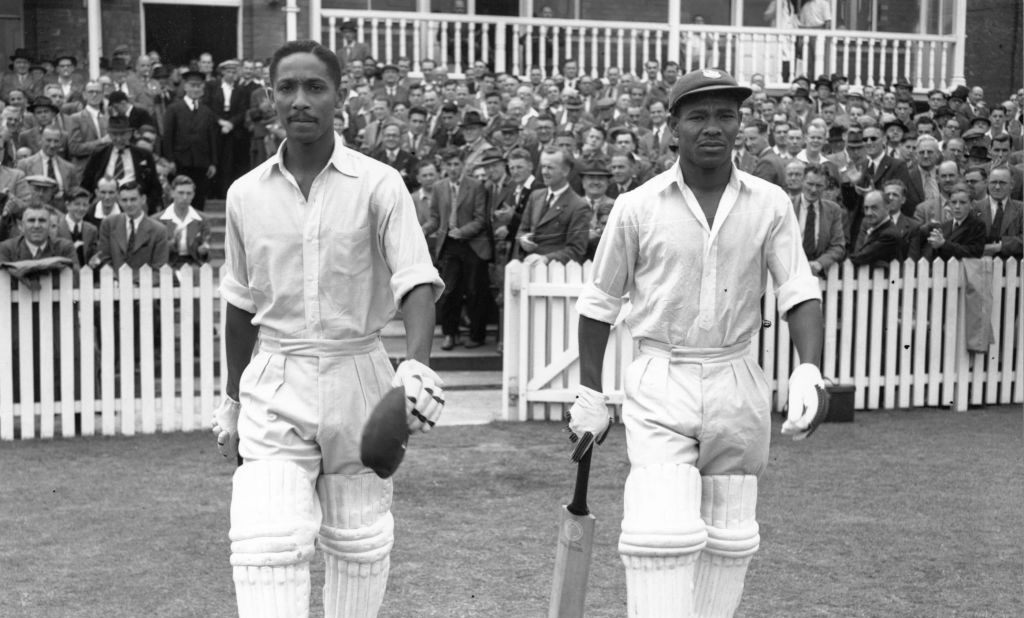
West Indies cricketers Frank Worrell (L) and Everton Weekes (R) go out to resume their record-breaking innings against England at Trent Bridge. (Central Press / Getty Images)
In 1961, hundreds of thousands of Australians lined the streets of Melbourne to give a tearful farewell to the motorcade passing them by. The Australian test cricket team had just won the home series two to one, but the crowd wasn’t cheering for them.
The motorcade contained the West Indies cricket team under its first ever black captain, Frank Worrell. The team had played cricket of such quality and excitement that they won the hearts and minds of the Australian public. This spontaneous display of affection was in many ways the culmination of a long struggle for West Indies cricket to banish race from any consideration of its leadership — and reach its full potential in the sport.
The final stretch of this struggle had an unlikely leader. C. L. R. James, the Trinidadian Marxist intellectual, was often relegated to the fringes of political life, but he was at the center of the successful campaign to transform West Indies cricket. In the process, he demonstrated in action what he had for so long observed in writing: that cricket was a site of deep social conflict within West Indian life, and a site of social resistance.