US Workers Need a Federal Paid Sick Leave Guarantee
Workers nationwide lack a federal guarantee of paid sick leave in the United States. Establishing a federal paid sick leave guarantee would improve the lives of all American workers — railworkers included.
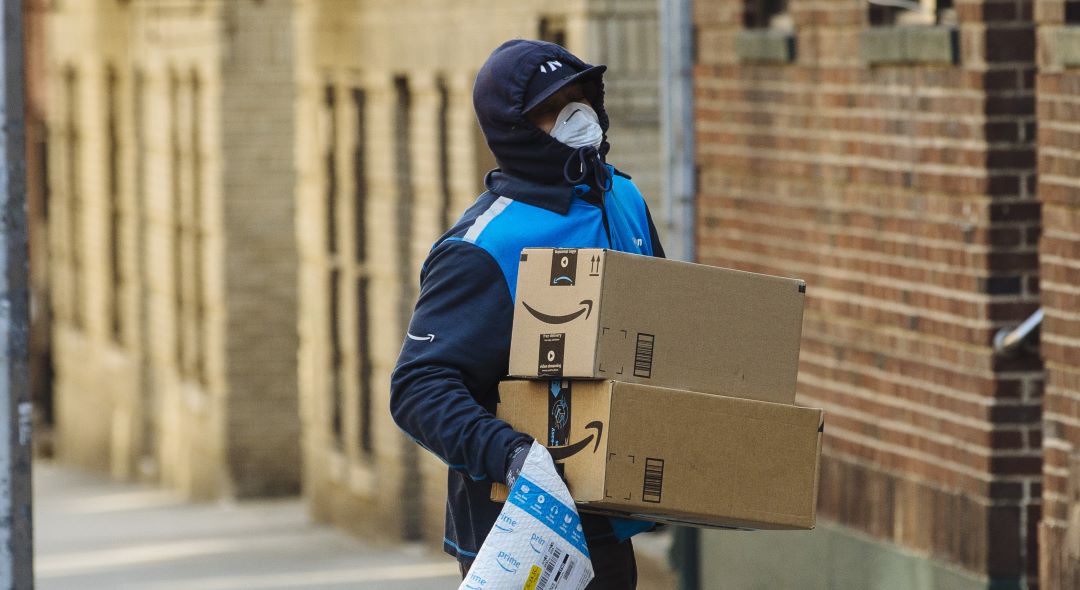
A worker wearing a protective mask and gloves carries Amazon boxes during a delivery in the Bronx, New York, on March 26, 2020. (Angus Mordant / Bloomberg via Getty Images)
In early December, President Joe Biden signed a bill that forced railroad workers and their large, profitable employers to accept a contract that did not include paid sick time, a central demand of the railworkers’ unions. Congress crafted a deal intended to avert the economic consequences of an impending rail strike, but progressive voices like Senator Bernie Sanders insisted that any deal must include seven paid sick days. After a handful of Senate Republicans stood in the way of paid sick leave, Democrats ultimately compromised on a deal without it.
This moment, a lost opportunity to improve working conditions, calls for a larger discussion about how workers nationwide lack a federal guarantee of paid sick leave. The Family and Medical Leave Act (FMLA) only requires up to twelve weeks of unpaid sick leave. According to the Economic Policy Institute, unpaid sick leave “can make a painful dent in the monthly budget,” especially for those with longer illnesses. This makes it especially problematic that one in five civilian workers, 33 million people in all, do not receive paid sick time.
Establishing a federal paid sick leave guarantee would improve the lives of railworkers and others in nonprofessional/nonmanagerial jobs, who do not receive generous paid time off. But the way that federal paid sick leave gets implemented, whether it’s modeled after the states or international examples, is equally important.