Morocco’s World Cup Run Was a Political Game Changer for North Africa
The Moroccan football team and its fans subverted a World Cup that looked set to be a stultifying showcase for state and corporate power. From solidarity with Palestine to the celebration of Amazigh identity, they’ve left behind an important legacy.
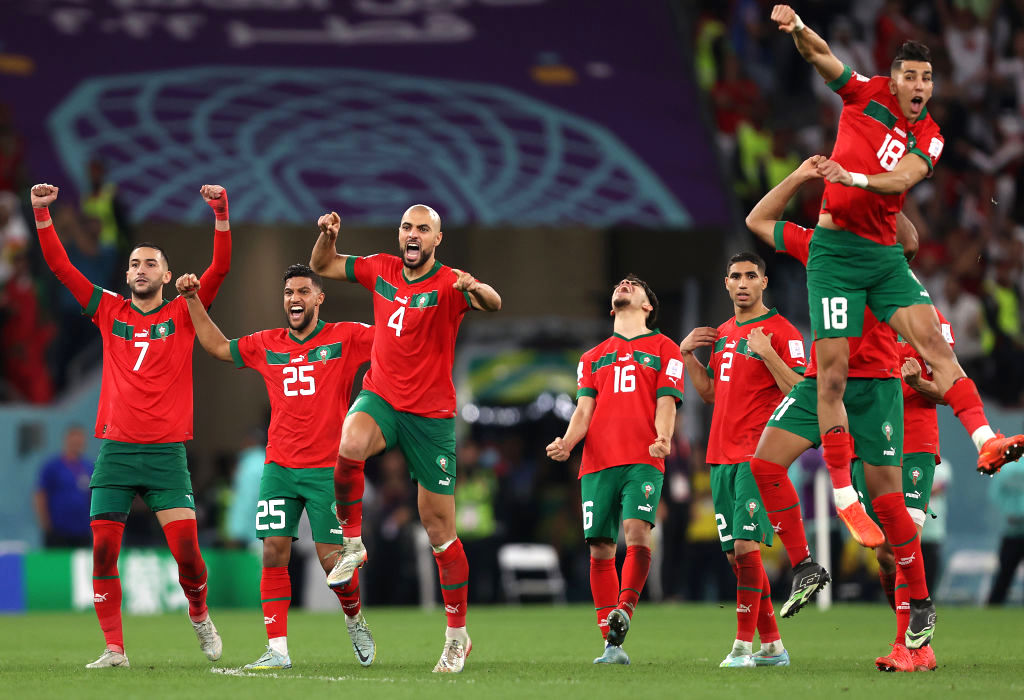
Morocco players celebrate after their win in the penalty shoot-out during their World Cup match against Spain on December 6, 2022 in Al Rayyan, Qatar. (Julian Finney / Getty Images)
Morocco’s run in this World Cup was exhilarating. Led by Paris-born coach Walid Regragui, who took over only three months ago, the Atlas Lions exceeded all expectations, defeating three former European colonial powers (Belgium, Spain, and Portugal), and acquitting themselves well in their semifinal defeat to reigning champions France.
From the mass prayer sessions in Indonesia to the celebrations on the streets of Somalia and Nigeria, this team has won the hearts of millions — Africans, Arabs, Muslims, and migrants who see themselves in this team. Images that will endure: playmaker Hakim Ziyech’s light-footed turns, midfielder Sofyan Amrabat — dubbed Minister of Defense — and his barreling runs, and team captain Achraf Hakimi’s post-match embrace of his mother, who worked as a domestic in Madrid, Spain, while raising her children.
But for Moroccans, it’s also the Moroccan takeover of the Qatari stadiums that has captivated the world: the pulsating drums, castanets, colorful outfits, and elaborate songs. One chant has tens of thousands jumping up and down, “Bougez! Bougez! li ma bougash, mashi Maghribi” (“Move! Move! If you don’t move, you’re not Moroccan”).