Elon Musk’s Purge of Journalists Should Be a Wake-Up Call to Liberals About the Dangers of Online Censorship
Elon Musk’s petty-minded ban of several mainstream reporters has transformed many who previously dismissed free speech concerns on Twitter into outraged anti-censorship crusaders. However laced with hypocrisy, their about-face a good thing.
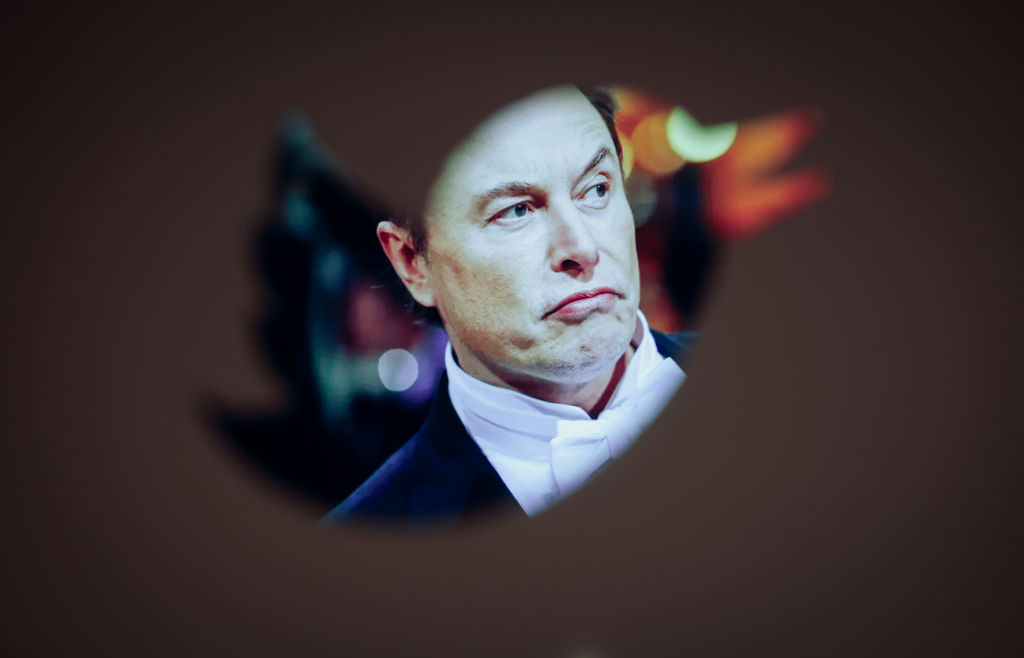
Elon Musk and the Twitter logo. (STR / NurPhoto via Getty Images)
The trouble with the Elon Musk Twitter controversy is that at its heart there is an almost universally shared hypocrisy: people care about freedom of speech when it comes to the things that they like or agree with, and stop caring or become outright hostile to it when it comes to the things they don’t.
So you have the billionaire Musk buying Twitter to reinstate the accounts of the conservative satirical website he likes and other right-wing voices, while at literally the same time banning a spate of left-wing accounts whose views — among other things, support for rioting and vandalism — he doesn’t care for. The latest move by the self-proclaimed “free speech absolutist” was to suspend an account that regularly tweeted out the publicly accessible flight activity of his private jet (which Musk claimed was tantamount to doxing and putting out “basically assassination coordinates”), before suspending a string of journalists — from the Washington Post, the New York Times, CNN, the Intercept, among others — who not only tweeted about the flight data, but have also needled or reported critically on him.
Meanwhile, on the other side, liberals are up in arms over this latest move, as they should be — even though they spent the whole of Musk’s time at Twitter so far demanding that he censor more, and mostly ignoring his purge of leftist accounts. In fact, we’re barely a week out from watching journalists tie themselves in knots to dismiss or even justify Twitter’s outrageous 2020 decision to lock the New York Post out of its own account and throttle the sharing of its Hunter Biden laptop story. One of the planks of that dismissal was the idea that since the government didn’t play a role in the decision (even though it did), this act of press censorship shouldn’t disturb us — a technicality we’re suddenly not hearing anymore now that those affected aren’t a right-leaning paper and its reporting critical of the Democratic presidential candidate.