American Political Corruption Is the Worst It’s Been Since the 19th Century
With the proliferation of favor-trading and the use of public office as a stepping stone to lucrative private gigs, America’s political institutions have become as debased and corrupt as they were in the 1800s.
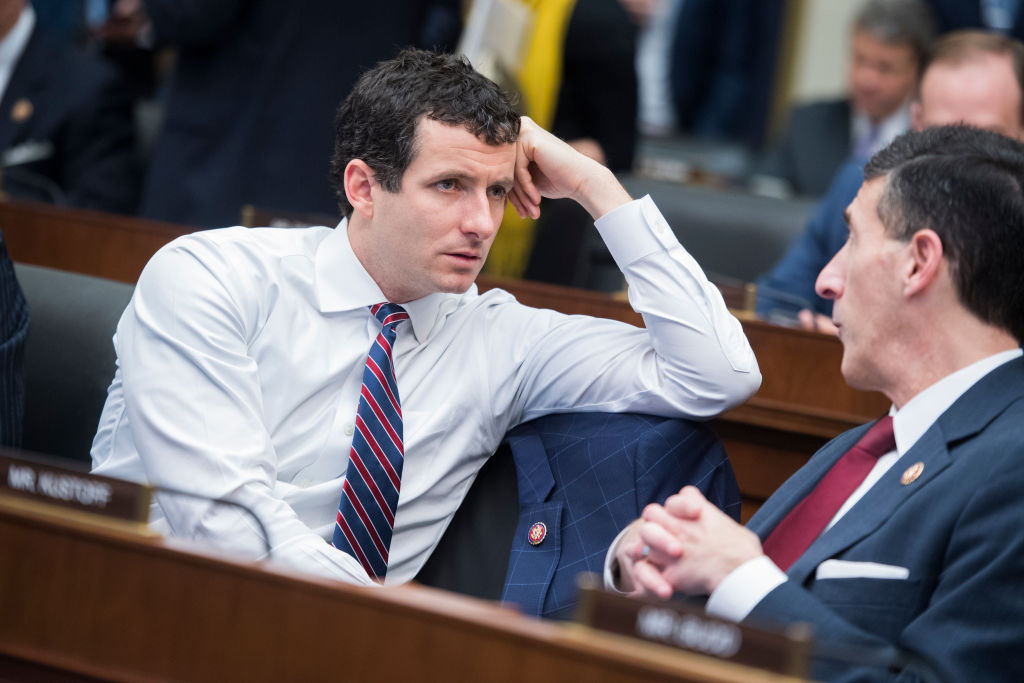
Representative Trey Hollingsworth (R-IN) at a House Financial Services Committee organizational meeting on January 30, 2019. (Tom Williams / CQ Roll Call via Getty Images)
Last month, the Lever’s Andrew Perez reported on a remarkable exchange during a televised hearing of the House Financial Services Committee. Given five minutes for some comments, the committee’s chair, Representative Trey Hollingsworth (R-IN), addresses Bank of America CEO Brian Moynihan and thanks him for hiring his own top aide:
Before I get started on my questions Mr. Moynihan, I wanted to let you know that . . . Sruthi, raise your hand, Sruthi. She has been my team member for a couple of years, but [next week], she becomes a Bank of America team member . . . she is very, very excited, so I hope you’ll take good care of her and know and recognize the talent that she has shown already in our office. I’m sure she’ll do the same at Bank of America.
The whole thing is a surreal, if mostly unsurprising glimpse into the kind of banal and open corruption that has become so normalized it no longer even feels the need to hide. Hollingsworth, a longtime friend of the very industry his committee is supposedly charged with overseeing, sounds so chummy with Moynihan the exchange could have just as easily taken place over cocktails or on the golf course. Moynihan’s equally effusive reply — “We’ll do that, and her father already works for us!” — could not have been more perfect if he’d tried. As David Sirota has observed of the incident, what’s notable is not so much the revelation that a Congressional aide employed by an ally of big banks is headed to work for one but rather that the move is being discussed in a public forum stripped of any artifice.