Liz Truss’s Government Was Brought Down by a Capital Strike
Tory British PM Liz Truss resigned this morning, and her downfall is well worth celebrating. But make no mistake: her government was brought down by a revolt of financial capital, of the same kind that would threaten a progressive economic agenda.
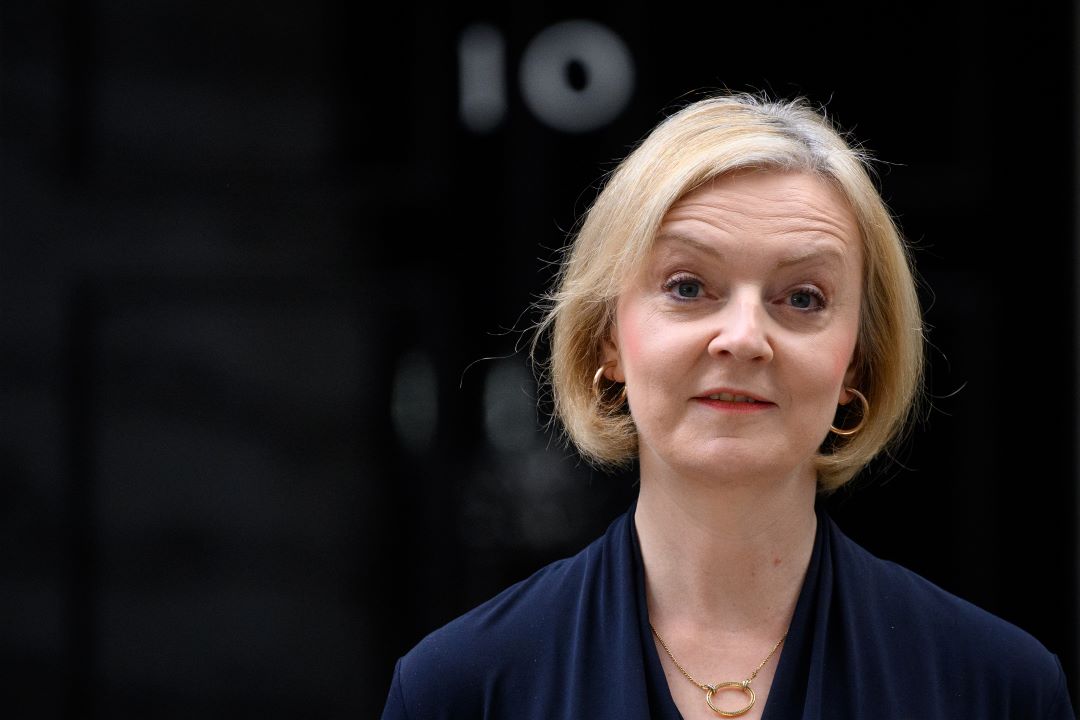
British prime minister Liz Truss announces her resignation as she addresses the media outside Number 10 Downing Street on October 20, 2022, in London, England. (Leon Neal / Getty Images)
It’s hard not to cast a wry smile over the sorry fate of the UK’s latest offering from the Conservatives, Liz Truss. Singularly incapable of fulfilling the duties of her office — wooden, lacking in charisma, and with no hold over the detail of governance or the economy — Truss has become the shortest-serving prime minister in British history. She’s a national and international laughing stock, and her fate couldn’t be more deserved.
In September, Truss and her erstwhile chancellor, Kwasi Kwarteng, announced plans to embark on an insane voyage of completely unfunded borrowing — using the British state as a piggy bank to funnel billions of pounds of public money into the hands of the wealthy cartels that now control the country’s privatized infrastructure: utilities and energy, private health, education, and transport.
It was an evolution of neoliberal “trickle-down” economics that has long been little more than widespread, state-sanctioned corruption — a particularly British model that has been honed over decades of outsourcing and privatization. Insofar as there was any economic rationale behind the scheme whatsoever, it extended no further than a blind belief that in piling yet more money into the hands of Britain’s crooked contractors, bankers, and billionaires they could somehow be induced to reinvest that money into job creation and research, as opposed to their consistent preference for hoarding it like dragons in offshore tax havens.