A New Doctors’ Union in the South Is a Model for Health Care Organizing
Doctors’ unions are rare in the US, and unions comprised of both physicians and other medical providers are even rarer. But in North Carolina, a group of medical providers has successfully organized an interprofessional union.
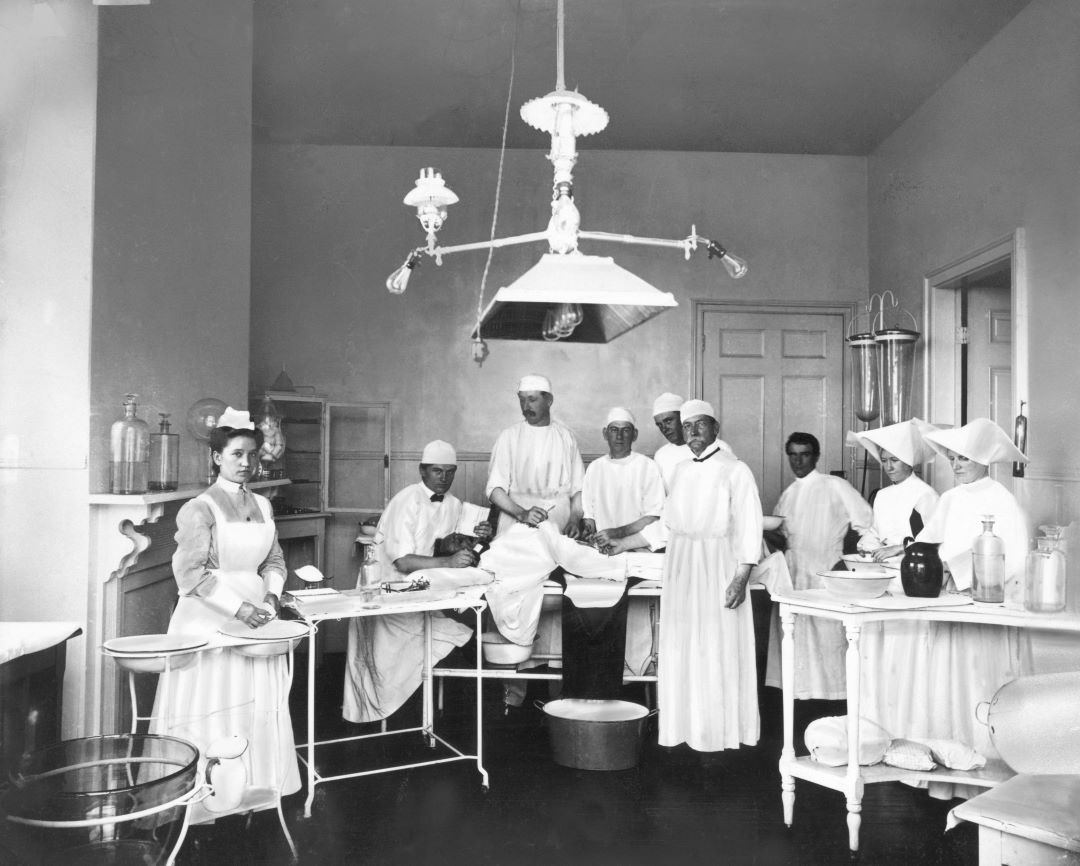
Operating room in a Mobile, Alabama, hospital, circa 1900. The doctors and nurses pose before operating on a patient. (Bettmann / Getty Images)
Each day on his commute to the clinic, Dr Crister Brady traverses the rolling farmland of Eastern North Carolina, gliding past the neon-green tobacco fields where many of his patients live and work. Brady’s clinic, the Prospect Hill Community Health Center, is one of ten federally qualified health centers operated by Piedmont Health Services Inc. The nonprofit provides comprehensive primary care services to patients who are uninsured or who receive coverage from Medicaid and Medicare.
Brady’s desire to care for underserved communities dates back to his experience providing “street medicine” to the unhoused. Today he aims to use his credibility as a physician to chip away at the artificial divisions designed to separate caregivers from their patients and each other.
Last year, Brady and his physician colleagues linked arms with other providers including physician associates (PAs), nurse midwives, and nurse practitioners (NPs) to form an interprofessional union. Doctors’ unions are rare in the United States — and unions comprised of physicians and other medical providers are even rarer. In March, members of Brady’s union, Piedmont Health Services Medical Providers United, voted 91 percent to form a union, an astounding margin for the country’s second least-unionized state.