How a Wisconsin Autoworker Dodged Death Threats to Grow a Fighting, Multiracial Union
Jon Melrod was part of a wave of student radicals who took jobs in factories in the 1970s. He spoke to Jacobin about life in working-class Wisconsin, becoming a workplace leader, and how to merge shop-floor fights with a broader left politics.
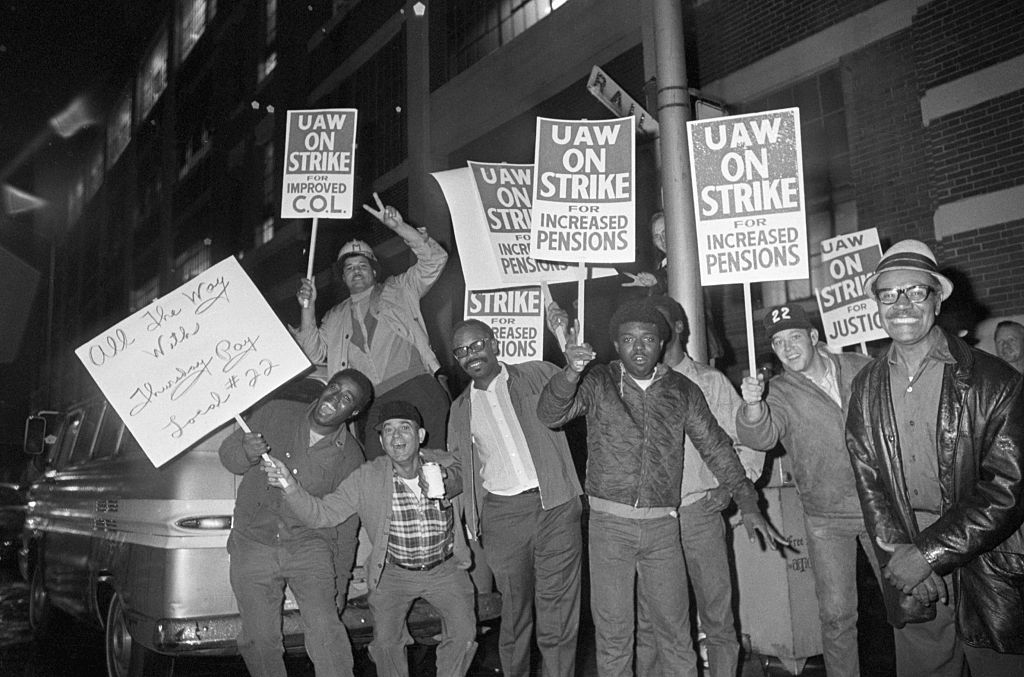
General Motors workers wave picket signs outside a Detroit plant on September 14, 1970, after the United Auto Workers voted to strike. (Bettmann Archive via Getty Images)
Knife fights. Brawls with the union president in the men’s bathroom. Sleepless nights up meeting, printing flyers, and sometimes shutting down the bar. The life of a militant worker in the factories of the 1970s was intense, exhilarating, and often dangerous — not just for the obvious reasons. Just ask student-radical-turned-factory-worker Jon Melrod, author of the new book Fighting Times: Organizing on the Front Lines of the Class War. He talked his way out of a life-and-death moment with a gun-toting Nazi coworker and survived an armed encounter with the FBI, but exposure to industrial chemicals left him with a cancer that he wasn’t sure he would beat. Factory work itself was grueling: heavy, repetitive physical labor on the line at automakers like American Motors Corporation (AMC). And there was the mundane but ever-present threat of being fired on the whim of an anti-union boss — a blow from which working-class people aren’t guaranteed to recover.
What moved Melrod, and tens of thousands of other 1960s student radicals, to leave behind the campus and “go into industry,” as they called it? In Fighting Times, Melrod documents his thirteen years in factories, most notably as a member of United Auto Workers (UAW) Local 72 and its reform caucus, also called Fighting Times. He and his fellow militants saw building adversarial, democratic, multiracial unions as the cornerstone of creating a broader left political movement, whose goals extended far beyond the shop floor. Jacobin contributor Ella Teevan sat down with Melrod to talk about life in Milwaukee’s working class, and what lessons socialists in labor organizing today can draw from the experience of the 1970s.
Ella Teevan
What inspired you to write the book? You’ve had a storied career and life on the Left — as a militant student in the ’60s, a lawyer defending refugees, and a fighter for indigenous rights in the Philippines. Why focus on your time as a rank-and-file worker, and why now?
Jon Melrod