Blonde Is Marilyn Monroe Abased All Over Again
Based on Joyce Carol Oates’s novel, Andrew Dominik’s film Blonde ignores the assertive and hardworking real-life Marilyn Monroe and instead gives us a lurid tale of perpetual victimization.
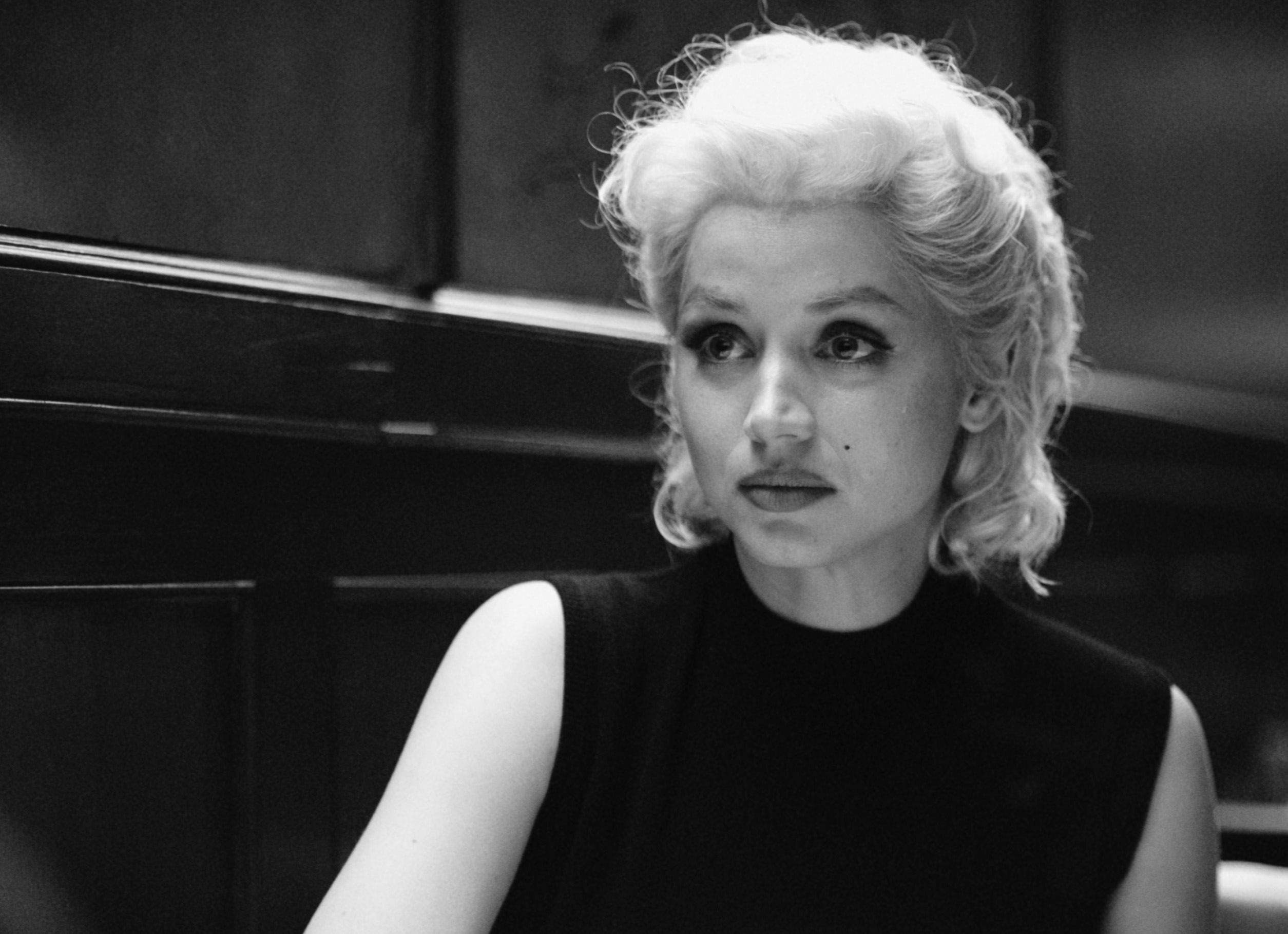
Ana de Armas plays Marilyn Monroe in Blonde. (Netflix)
By now the Netflix film Blonde is notorious for its length, it’s NC-17 rating, and its cruelly narrow view of film star Marilyn Monroe (Ana de Armas) as a relentlessly abused and exploited waif from early childhood through her death of a drug overdose at age thirty-six.
Joyce Carol Oates, whose 2000 novel of the same name was adapted into the film, claims that she was allowed to watch various rough cuts of the film but finally had to stop because “the film is emotionally exhausting.” But accurate, she says:
Oates argues that Blonde, which vividly depicts miscarriages, abortions, and sexual assaults, is “probably closer to what she actually experienced” than other films about Marilyn Monroe; “The last few days of her life were brutal. . . . The real things that happened to Marilyn Monroe are much worse than anything in the movie.”