UPS Is Installing Surveillance Cameras in Our Trucks, but Not Air Conditioning
UPS drivers are facing dangerously hot working conditions this summer. But instead of installing AC, or making changes that would reduce exposure to extreme heat, the company is installing cameras to surveil workers on the job. Now drivers are fighting back.
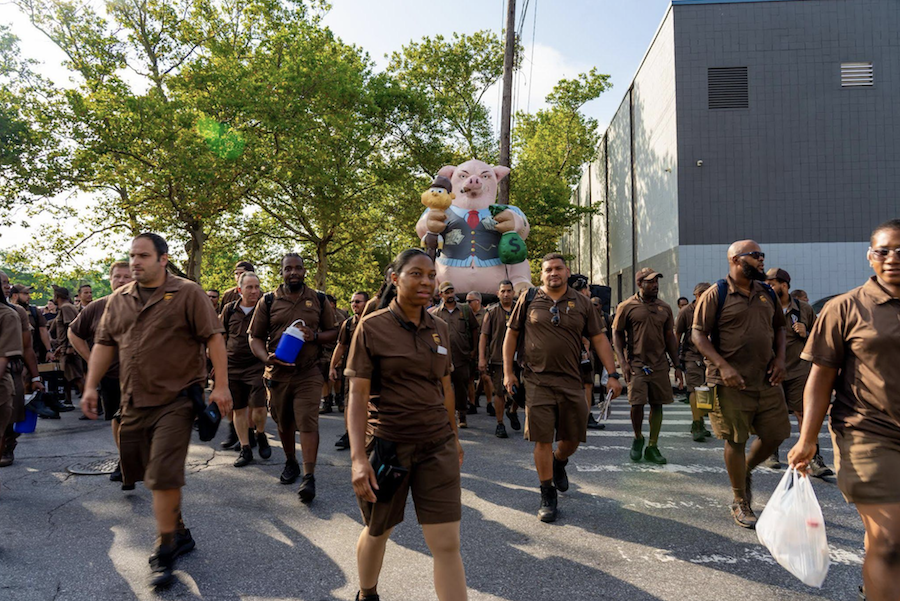
Drivers at Brooklyn’s Foster Avenue facility head to work after demanding “Safety Not Surveillance” at a rally on July 28, 2022. (Alex Moore, communications director of Teamsters Joint Council 16)
One day before heading into work last week, I stopped into the bodega across from my apartment building to buy a Gatorade. It was going to be another hot day. The man in line behind me noted my UPS uniform and said, “Let me ask you a question: Is it true that you don’t have air conditioning in your truck?” I told him it was true, and that a driver in California had died recently due to heat exhaustion. He stared at me in awe. I held up the Gatorade and half-jokingly added, “They tell us to drink electrolytes.” He shook his head. Then I told him that our union had planned rallies to demand air conditioning, and that we may have a chance to win it in our next contract. He perked up and said, “I hope you do, brother.”
When the weather forecast shows temperatures pushing into the high nineties at the peak of New York’s humid summer, we UPSers brace for extreme conditions. But try as we might, it’s hard to stay cool. Many drivers bring coolers full of ice and put them in the back of the truck, but by lunchtime all the ice has melted and the cooler has become a bucket of warm water.
And we need that ice. The cargo area of the package car is like a sauna, with temperatures reaching 120 or 130 degrees. On any given day, we step into the cargo area over a hundred times to retrieve packages. All it takes is a few seconds before you’re sweating bullets. To make matters worse, packages are almost always loaded into the trucks out of order. Every package needs to be sorted in the order it is supposed to be delivered, which is technically the job of the preloaders, but the task is usually shifted onto us drivers. It can take an additional thirty minutes to an hour to complete, and if we don’t do it we can be disciplined. I have personally been issued a warning letter by management for not having my truck perfectly sorted when stopped during an observation. (Management personnel follow drivers in their personal cars and film us with their personal phones.)