Cricket Is Political, and Shane Warne Knew It
Popularized by the dying British Empire, cricket is a sport that has always been riven by class politics. The career of Australian bowler Shane Warne, who died earlier this year, offers a microcosm of this history.
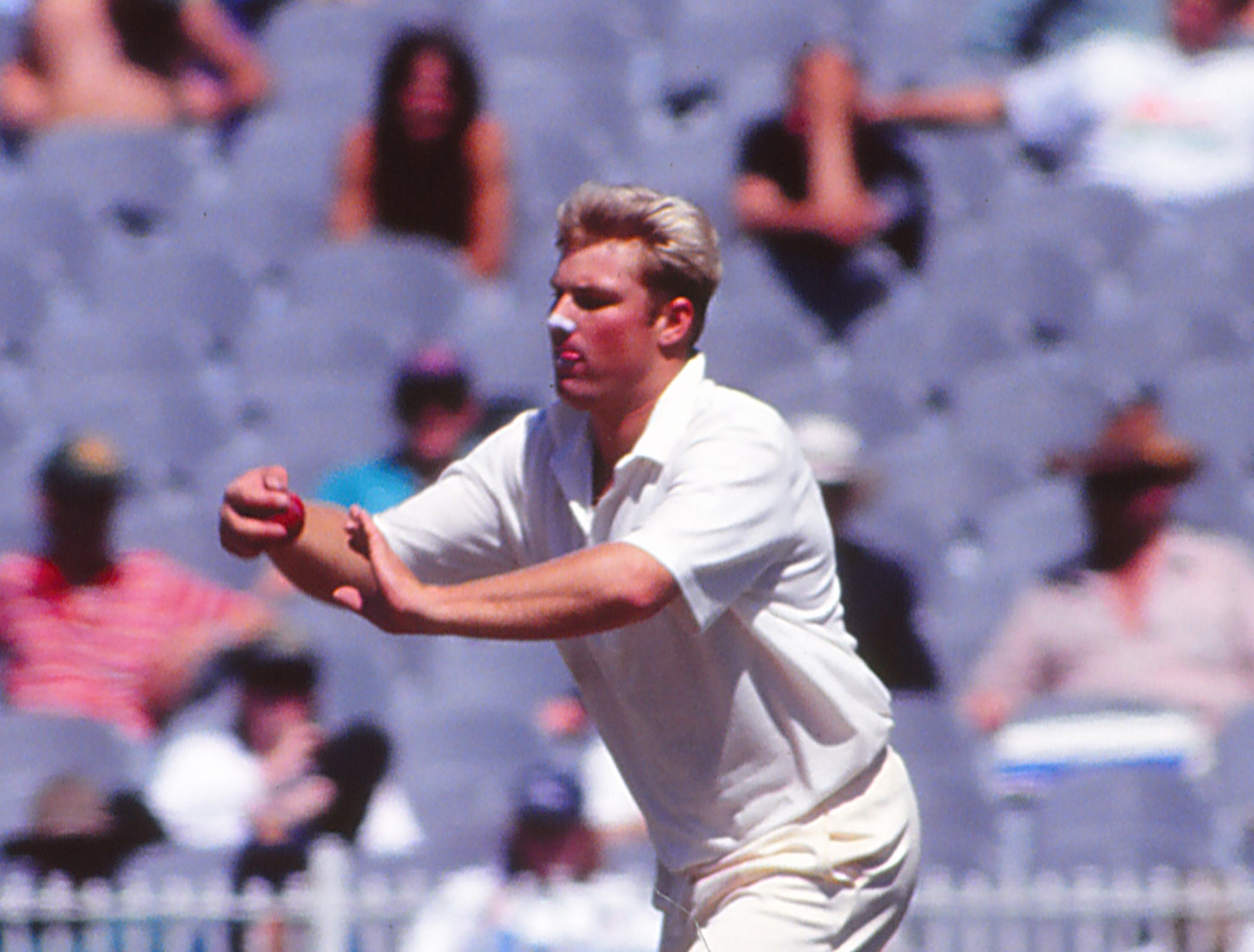
Shane Warne of Australia bowls in a Test match. (Getty Images)
In the months since his death, cricket fans have adorned Shane Warne’s statue at the Melbourne Cricket Ground (MCG) with a curious tribute. At the famous bowler’s feet, jars of vegemite, tins of baked beans, and cans of Victoria Bitter form a praetorian guard. These humble offerings reflect Warne’s public image as a working-class larrikin. It’s a legacy that contrasts starkly with Sir Donald Bradman, Australia’s most revered cricketer, and an otherworldly, upper-class figure.
According to Wisden, the ultimate reference book on the game, both Bradman and Warne deserve a place on its list of the five greatest cricketers of the twentieth century. Their stories — as well as those of the other three cricketers on Wisden’s list (Jack Hobbs, Garfield Sobers, and Vivian Richards) — provide insight into the geopolitical and class tensions that have shaped the history of the sport.
Patricians and Plebians, Batters and Bowlers
Shane Warne is the only specialist bowler to make it onto Wisden’s list. This imbalance hints at a half-forgotten class division in cricket: that between batter and bowler. In the Victorian era, batting was seen as an elegant pursuit for amateur gentlemen, while the hard labor of bowling was allocated to working-class professionals.