The World of Ottessa Moshfegh’s Lapvona Is One of Meaningless Cruelty
In Lapvona, Ottessa Moshfegh’s latest novel set in a faux-medieval village, random acts of violence and cruelty are the law of the land. Her refusal to explain the social causes of this misery makes her depiction of the world shallow and superficial.
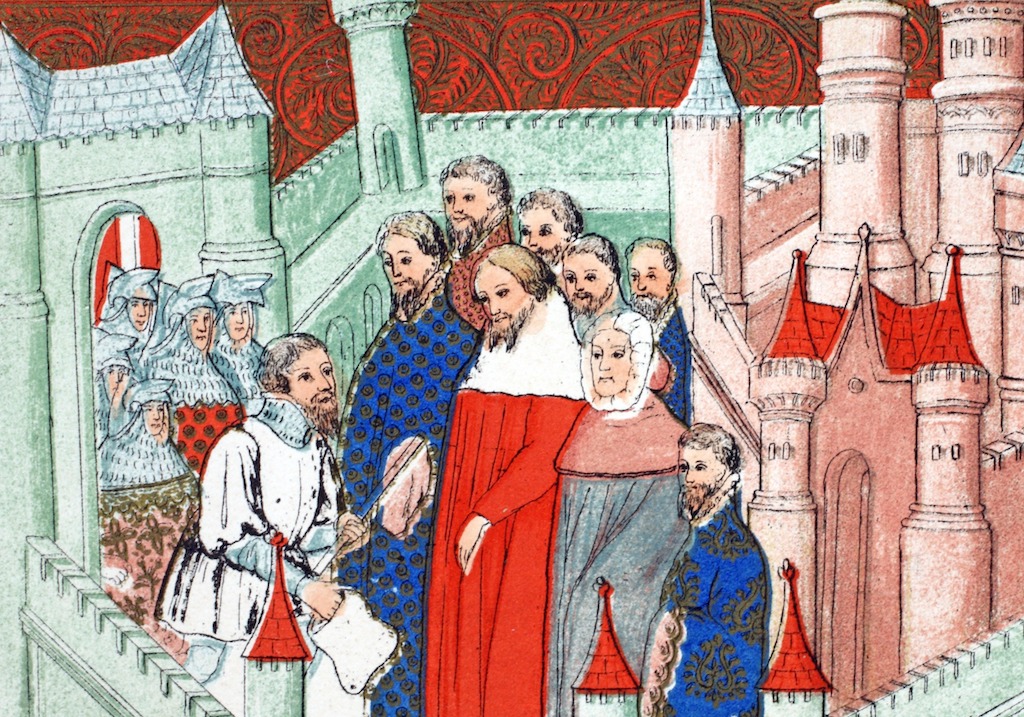
Lithograph reprint of Le Prinse et mort du Roy Richart by Jean Creton. (Historica Graphica Collection / Heritage Images / Getty Images)
While waiting for an unspecified conclusion — to their lives? to the world? — Nell, the mother character in Samuel Beckett’s Endgame, remarks that there is “nothing funnier than unhappiness.” One imagines that if Ottessa Moshfegh were to interject herself into this conversation she would wryly add, apart from pitiless inescapable cruelty. The author of four novels, Eileen (2015), My Year of Rest and Relaxation (2018), Death in Her Hands (2020) and Lapvona, released this month, Moshfegh has made a name for herself as an explorer of cruelty and misery, self-inflicted or otherwise.
Role Reversals
Set in a faux-medieval town, Lapvona takes the author’s earlier fascinations to an extreme. A gang of bandits slaughter two men, three women, and two small children; a cripple entertains the lord by shooting grapes from his asshole into the mouth of a nun; and a spiritual healer encourages her visitors to eat the weakest. When one of the bandits that raid the town of Lapvona in the novel’s opening is apprehended: “Nobody could say what specific acts of horror this one pilloried bandit had committed,” and yet they pelt him with the excrement of farmyard animals anyway, before chaining him in the village square, cutting off his ear, and beating him. From the very first page, the reader is guided through a world connected by a chain of beatings, rape, murder, and pillage.
The story focuses on Marek the cripple, whose broken body is unable to do much more than carry water in a bucket from the well to his unappreciative father. Happenstance transports the shepherd boy from the fields to the high table where he joins the company of his fiefdom’s rulers. The idiot becomes heir to “the manor on the mountain” that “doubled, then tripled in size.” From this manor, the lord, Villiam, and his accomplice, the ungodly priest, Father Barnabas, subject the peasants of Lapvona to tithes, laws, punishment, and supposed military protection from the bandits that surround their lands. So strong is the peasant mindset in Marek that initially he craves the whip, saddened that those who now serve him will receive more of God’s love than him. Later in the story we are told his new role is “to be quiet and accept without question anything that happened at the manor.”