Starbucks Is Breaking Ground as One of the Worst Union Busters in Recent Memory
Starbucks and its union-busting law firm are pulling out all the stops in Seattle in an attempt to destroy the union push that has swept the country.
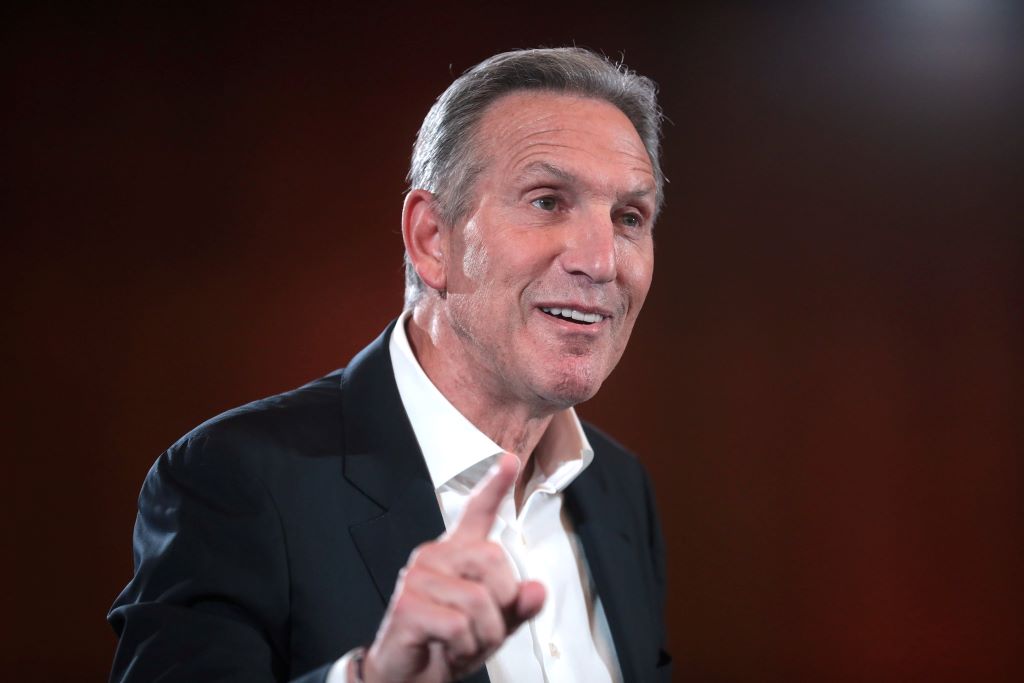
Starbucks CEO Howard Schultz appears willing to go to extraordinary lengths — even being prepared to risk destroying the company he created in order to break the union — to maintain unilateral control of the workplace. (Gage Skidmore / Flickr)
The Starbucks Workers United union campaign has now won over 164 National Labor Relations Board (NLRB) elections, and over 300 stores have petitioned for NLRB elections. But since the campaign first went public in August of last year, Starbucks HQ and its union-avoidance law form, Littler Mendelson, has mounted a blistering anti-union campaign to try to stop workers from self-organizing: it has fired workers, threatened them with loss of benefits, closed stores, reduced workers hours to get them to quit, promised rewards to those who agree to oppose the union, spied on pro-union workers and subjected them to endless hours of coercive group and, especially, individual anti-union meetings. Starbucks’s is one of the worst, most brutal, most mean-spirited anti-union efforts of recent decades.
Now, in the company’s hometown of Seattle, Starbucks is restructuring its operations in an effort to create a multiple-store bargaining unit – a “Heritage District” of three stores – which would undermine organizing activity at one of its most prized stores. But just as has happened at other pro-union stores — in Seattle, Portland, Eugene, Boston, Buffalo, Ithaca, Richmond, Virginia, Overland Park, Kansas, Columbia, South Carolina, and elsewhere — Starbucks workers at one of the proposed Heritage District stores, which has already petitioned for a NLRB election, are striking to protest management’s unlawful anti-union practices.
Few corporations are associated as closely with their home cities as Starbucks is with Seattle. The company’s first store, which opened in March 1971 in Pike Place Market, plays an important role in the Starbucks’s history and folklore. Today, the store is a tourist destination (customers regularly queue up to get in) that sells an enormous amount of company merchandise. The second important Pike Place store, located at First and Pike — the store that appears on countless photos of the iconic market — is also critical to its corporate identity, and Starbucks HQ would be loath to allow workers at either of these two stores to vote union.