Revolutions Look Different According to Authoritarian or Democratic Conditions
The Russian Revolution led to revolutionary upheaval in countries far beyond Russia. Looking at Russia’s imperial borderlands like Finland suggests that socialist struggle can look wildly different in autocratic versus parliamentary conditions.
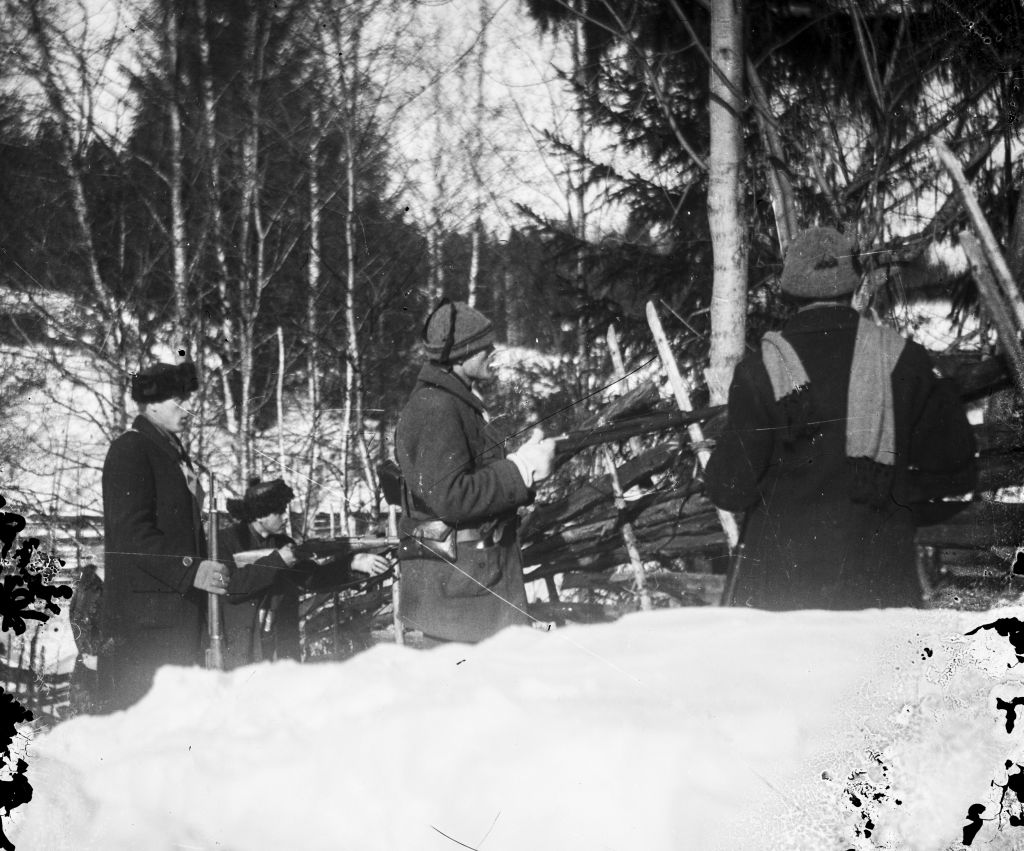
Finnish Red Guards during the 1918 Finnish Civil War, provoked by the Finnish Social Democrats’ attempt to carry out a revolution. (Universal History Archive / Universal Images Group via Getty Images)
In the decade after the disintegration of the Soviet Union, the history of Russian and Soviet labor and Social Democracy, once a subject of prodigious academic research, fell into a memory hole, as historians turned toward other topics. An engaged scholar and activist, Eric Blanc has not only revived exploration of a neglected subject but delved deeply into the history of Bolsheviks and Mensheviks and widened his lens to include the too often overlooked revolutionary Marxists of the borderlands of the tsarist empire.
Blanc writes simultaneously sympathetically to the aims and aspirations of the revolutionary socialists but critically as well — which, from a Marxist perspective, following in the tradition of the founder of that approach, ought to be the essential methodology of empirical and theoretical investigations. Revolutionary socialist movements were powerful, even dominant, emancipatory efforts in the non-Russian peripheries. In Georgia, Finland, Latvia, Poland, and elsewhere, they were the national liberation movements of the first two decades of the twentieth century.
As a historical sociologist, Blanc uses the natural experiment provided by the diversity of the tsarist political structure — in which the autonomy of the Grand Duchy of Finland allowed a legal labor movement and elections, a situation starkly different from the repression of independent politics in the rest of the empire — to argue that “successful insurrectionary movements [like the Bolsheviks] generally only arise under conditions of authoritarianism,” while “anti-capitalist rupture under parliamentary conditions [as in Finland] requires the prior election of a workers’ party to the state’s democratic institutions.”