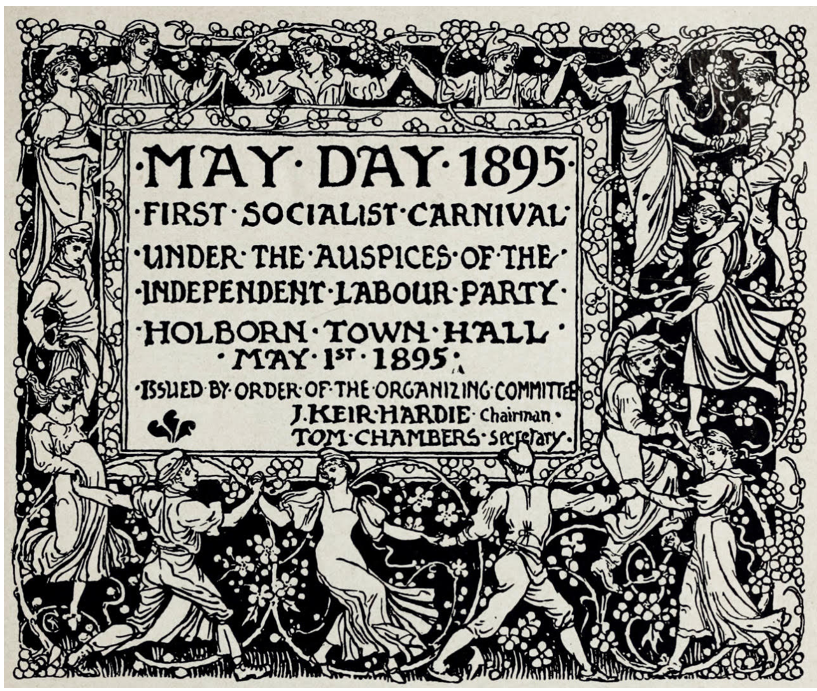
Walter Crane Was a Socialist Visionary Who Illustrated the Triumph of Labor
At the turn of the 20th century, Walter Crane’s groundbreaking designs captured the spirit of a rising socialist movement. More than a romantic dreamer, he saw how the triumph of labor could allow humanity’s artistic talents to flourish.
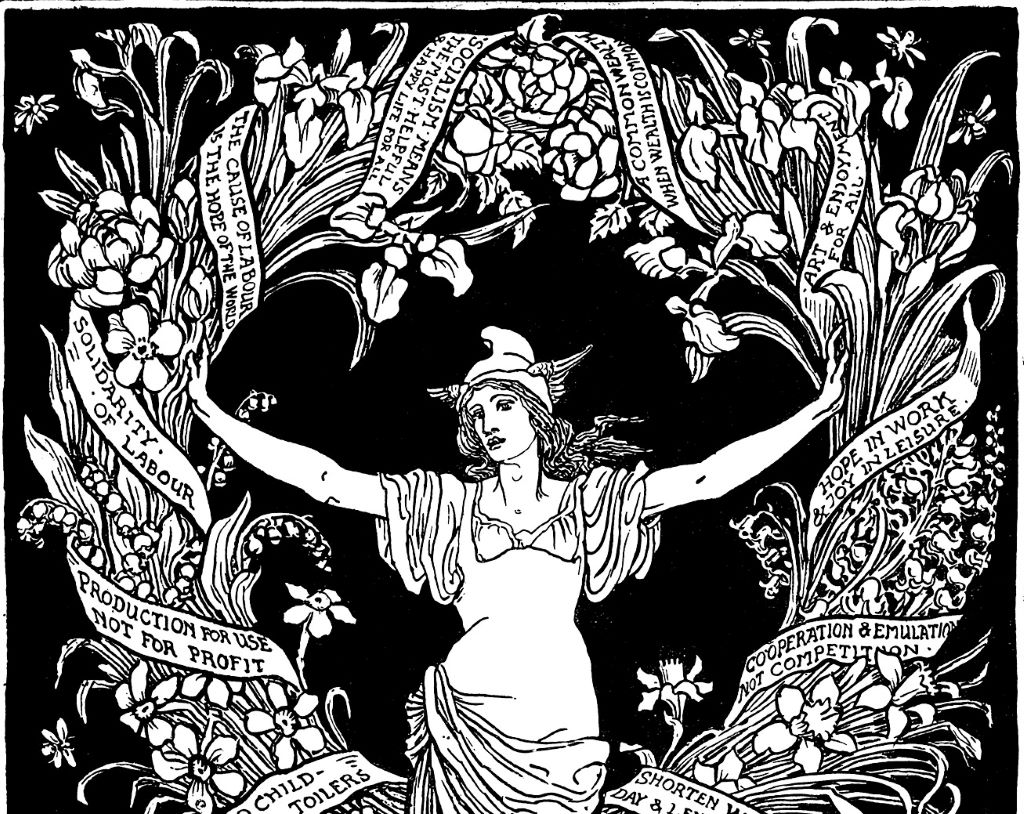
Original relief print of A Garland for May Day by Walter Crane, 1895. (Walter Crane / Wikimedia Commons)
Walter Crane woke up on a spring morning in 1884. He never slept again. As an artist and illustrator, Crane had drawn inspiration from pre-Raphaelite visions of universal brotherhood; as a political activist, he idolized John Stuart Mill and supported the radical, democratic left of the British Liberal Party. But by 1884, thirty-nine years since his birth to a family of Torquay decorators, the artist of enchantment had been thoroughly disillusioned.
The worst thing in the world had happened to Crane: he got what he wanted. Raising illustration to a fine art in the eyes of his peers, Crane saw his groundbreaking book designs warped in crude, commercial reproductions. Successive reform bills enfranchised ever wider circles of the population — but in industrial London, he only saw rising poverty and squalor.