Valerio Evangelisti Used Literature to Point the Way to Communism
The Italian communist Valerio Evangelisti, who died in April, was a science fiction pioneer. His work showed the power of literature to grasp the horrors of the present and imagine something beyond them.
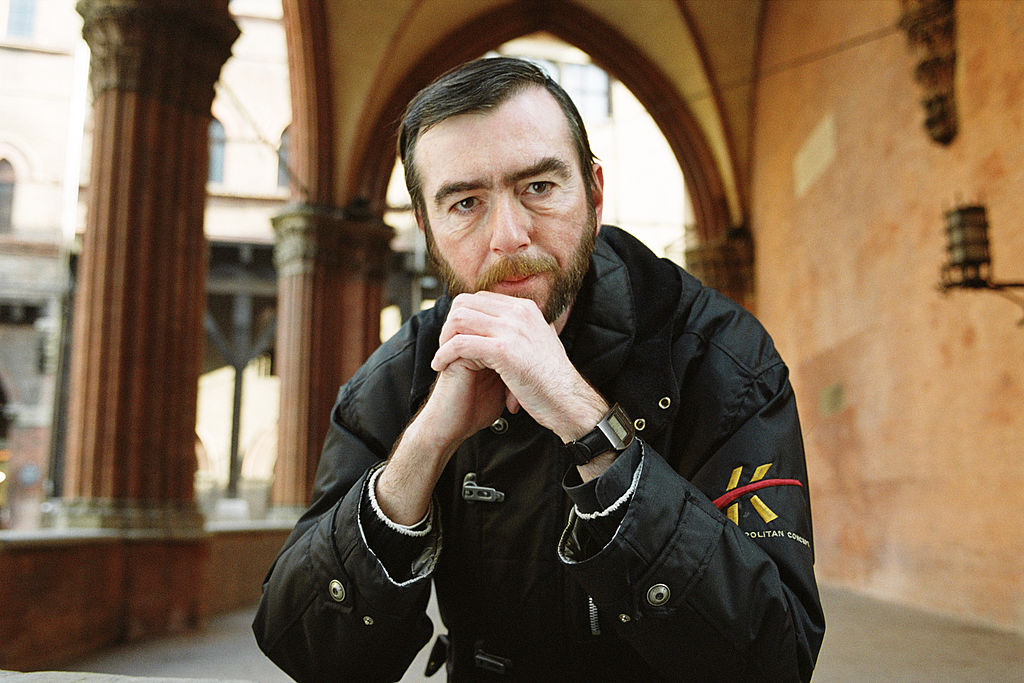
Valerio Evangelisti in Bologna, Italy, January 2002. (Ulf Andersen / Getty Images)
In a small cemetery nestled in the Apennine valleys of Italy’s Emilia-Romagna region, about a hundred people of all ages gather. The persistent rain leaves four unmarked red flags drenched. A visibly moved man lovingly places a fifth flag on the coffin: it is the red and black banner of the Confederación Nacional del Trabajo, the anarchist union that waged the resistance to Francoism from 1936 to 1939. From under the umbrellas rises the hymn of the “Internationale,” then someone selects a song from Spotify on a smartphone and turns the volume up to the max. I seem to recognize Sepultura, a Brazilian death metal band.
On April 18, Valerio Evangelisti, author of more than thirty novels translated in more than twenty countries, as well as an infinite number of short stories, essays, articles, and prefaces, died at age seventy. On the day of his funeral, the trade unions had called a demonstration in Rome with the slogan: “Lower your weapons, raise your wages.” A banner carried by dozens of workers reads: “From the factories to the ports, we shall be all! Ciao Valerio!” The slogan “We shall be all” belongs to the Industrial Workers of the World and gives the title to one of the novels that this writer from Bologna dedicated to the heroic struggle of the American revolutionary union.
This was not the first time that social movements had taken up Evangelisti’s books as their own: a decade ago, the Book Block students took to the streets with large book-shaped shields to defend themselves from police charges. Their message was clear: our imagination defends us from your violence. The titles that came out of this writer’s pen were also present on their covers. “I’d much rather see myself on these shields than win the Strega award,” Evangelisti commented. “I’ve never been so proud as when I saw myself up there.” Strega, in addition to being a saffron-colored herbal liqueur, is Italy’s most prestigious mainstream literature award. But there was very little mainstream about Evangelisti’s life.