Imagining the End of Capitalism With Kim Stanley Robinson
Kim Stanley Robinson is the author of more than twenty books, including New York 2140, Red Moon, and the Mars trilogy. He talked to Jacobin about his latest work, his vision of socialism, and why we must fight to imagine the end of capitalism rather than the end of the world.
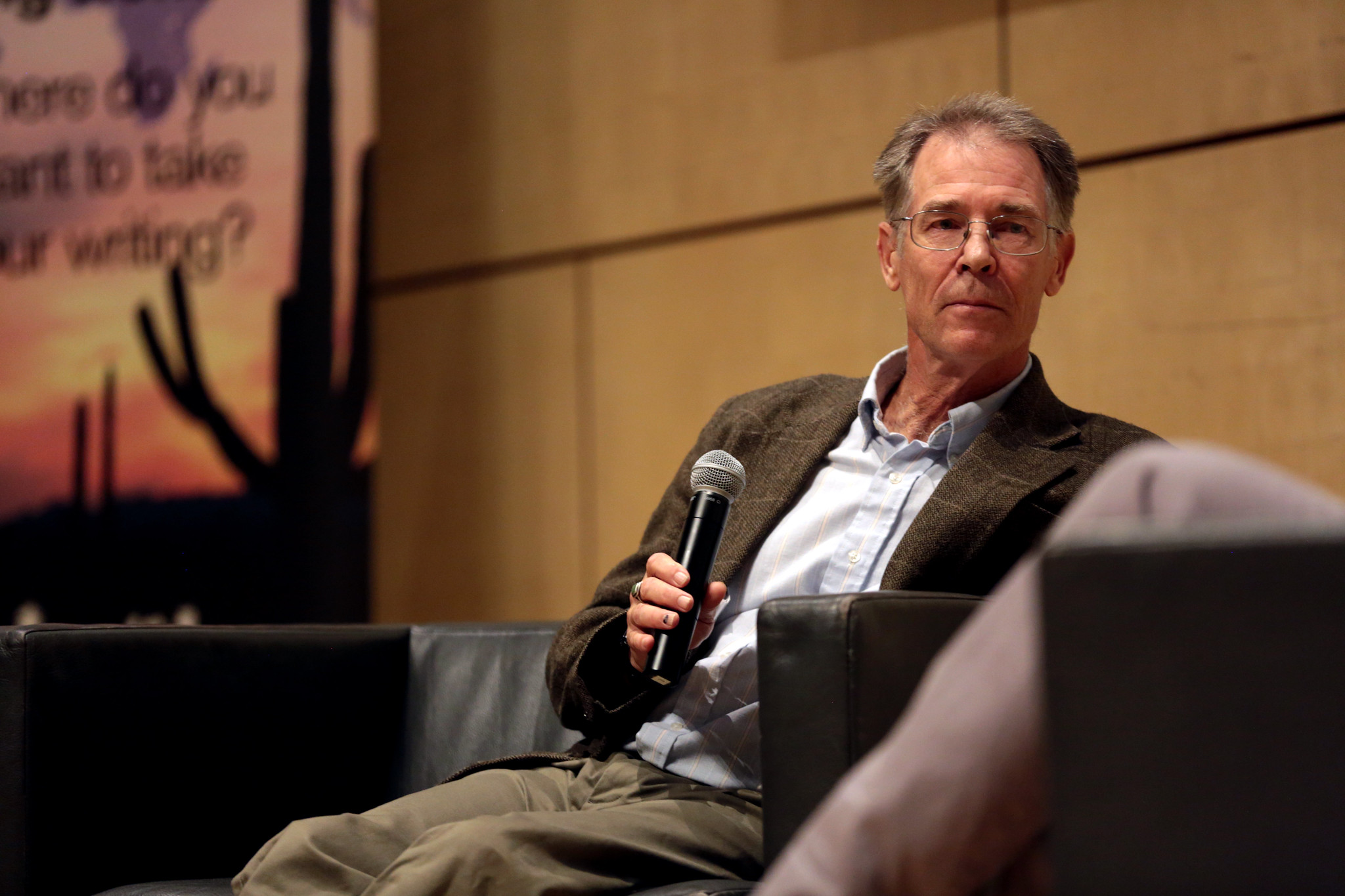
Kim Stanley Robinson speaking at the Phoenix Art Museum in Phoenix, Arizona in September 2017. (Gage Skidmore / flickr)
The Ministry for the Future is Kim Stanley Robinson’s latest attempt to fill in a major gap in the utopian fiction tradition. Rarely dealing with the transitional phase toward a better and different society, speculative fiction of this type instead explores the final stages of a utopian experiment. The Ministry is an exception to this tendency.
A speculative history of the next few decades, the novel revolves around an international ministry assembled to help implement the Paris climate agreement. The novel’s action spans the globe, featuring popular uprisings, ecoterrorism, asymmetrical warfare, student debt strikes, and geoengineering. Green New Deal–style programs in a number of the world’s biggest economies feature prominently — with a post-BJP India leading the way — and the commandeering of many of the world’s key central banks to finance the work toward a just transition off fossil fuels is explored.
This is the meat and potatoes of the long transition — that which has dismissively been called “a cookshop of the future.” But while it may not service as a political blueprint, it is undeniably fertile ground for a novel. And genre disregard for the subject matter has been to Robinson’s gain.