Undergraduate Worker Unions Are Taking Off
At colleges around the US, undergraduate workers are unionizing. The growing movement not only builds worker power on campuses but can help make university students into lifelong trade unionists.
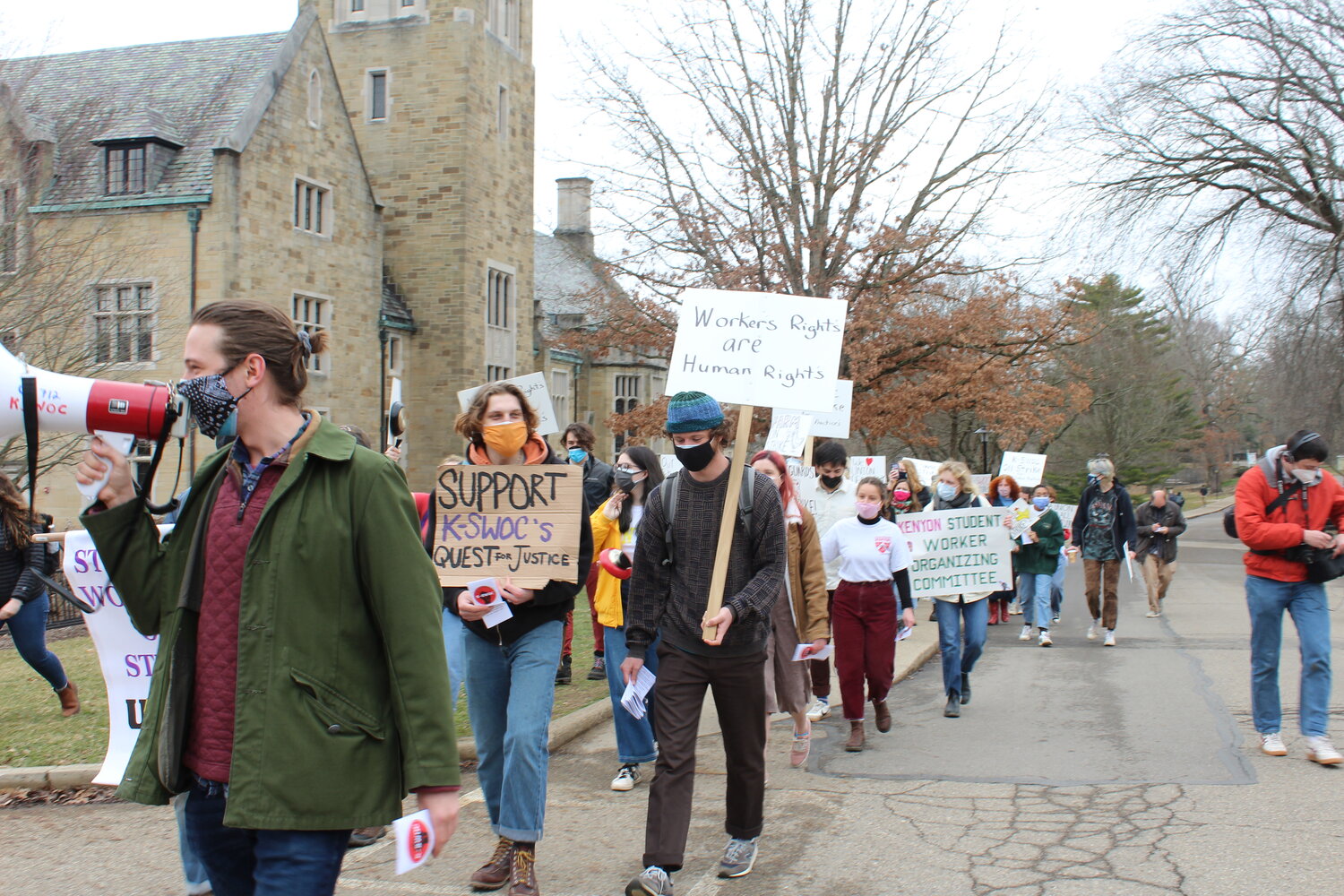
Members and supporters of the Kenyon Student Worker Organizing Committee march on campus. (John Ortiz / K-SWOC)
Labor organizing among undergraduate student workers has taken off in the last two years. This March, student dining workers at Dartmouth unanimously won an election for union recognition, residence life workers at Wesleyan won voluntary union recognition after a card check, the Union of Grinnell Student Dining Workers filed for a union election to expand its union to cover all student workers, and student workers at Kenyon went on strike as part of a yearslong effort to win union recognition for all campus workers.
The movement of undergraduate student-worker organizing has been spurred on by the pandemic, changes at the National Labor Relations Board (NLRB) under the Biden administration, and leadership from young socialists. This new campus labor organizing can improve college accessibility for working-class students and teach students why and how to rebuild the power of organized labor.
Before the pandemic began, in the spring of 2020, there were only two undergraduate student-worker unions in the country. Residence life workers at UMass Amherst unionized in 2002, as part of the UAW, and Grinnell dining workers formed an independent union in 2016.