Artists Can Build Power as Workers
Art workers are organizing in response to miserable pay and working conditions. The history of artist unions in the United States can help them chart a path forward.
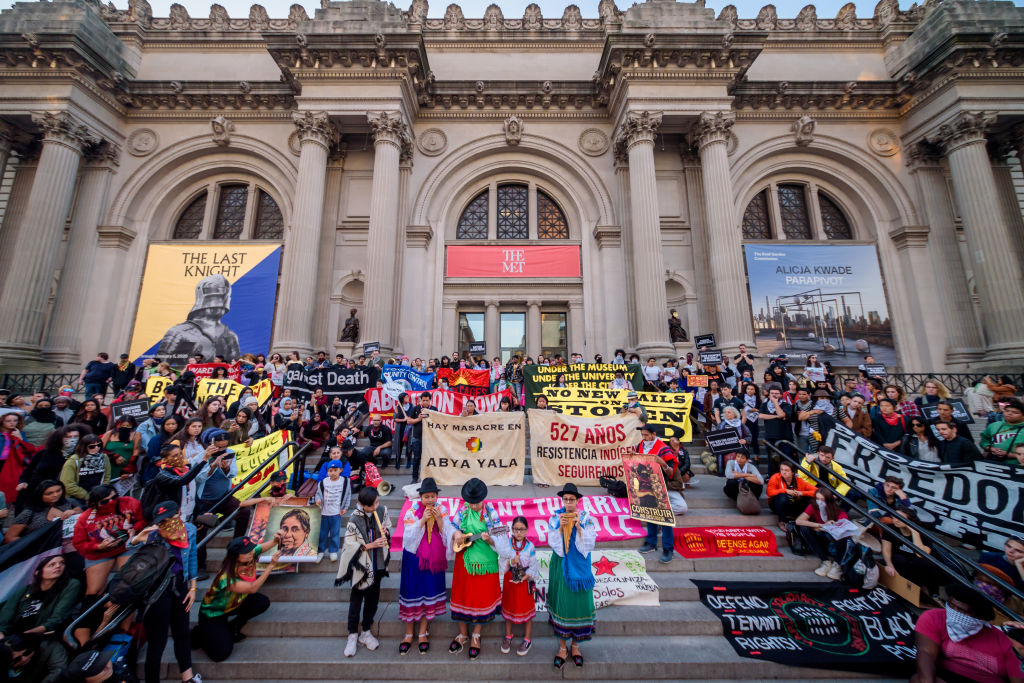
Protesters rally outside the Metropolitan Museum of Art in New York in 2019. (Erik McGregor / LightRocket via Getty Images)
Across the United States, art workers are developing new ways to build power. An ongoing wave of museum unionizations is bringing class politics to the forefront of the art world for the first time since the 1970s. This has led to a resurgence of protests against museum leadership and various union interventions at high-profile exhibitions and galas, in spite of administrative attempts to lay off dissenting staff and corral employees into separate unions within the same institution.
This unionized base is expanding. Much like academia, the philanthropy-driven art industry relies on a “precariat” class of workers to serve a leisure class of directors, financiers, gallerists, and auctioneers. Consequently, museum unions are widening their scope to those whose labor often goes unnoticed in the creative economy — from freelance educators to porters and cleaners — while art workers across the cultural sector form unions of their own.
In the last century, each major economic and social crisis has found American artists banding together to protect their rights and collective interests, including health care, rent relief, and federal programming. Today’s crisis is no different: outside of museums, artists are forming filmmaker and musician unions, workers’ inquiries into art-world exploitation, and independent bargaining units to represent gig workers. As such, the history of artist unions in the United States can help us map out their future in today’s burgeoning labor movement.