Capitalists Are Escalating Their Shakedown of American Workers
Last year’s modest wage gains have been wiped out by inflation, and prices are up across the board. Meanwhile, the rich are living large on superyachts and private islands — and they’re coming for working Americans’ last scraps of wealth.
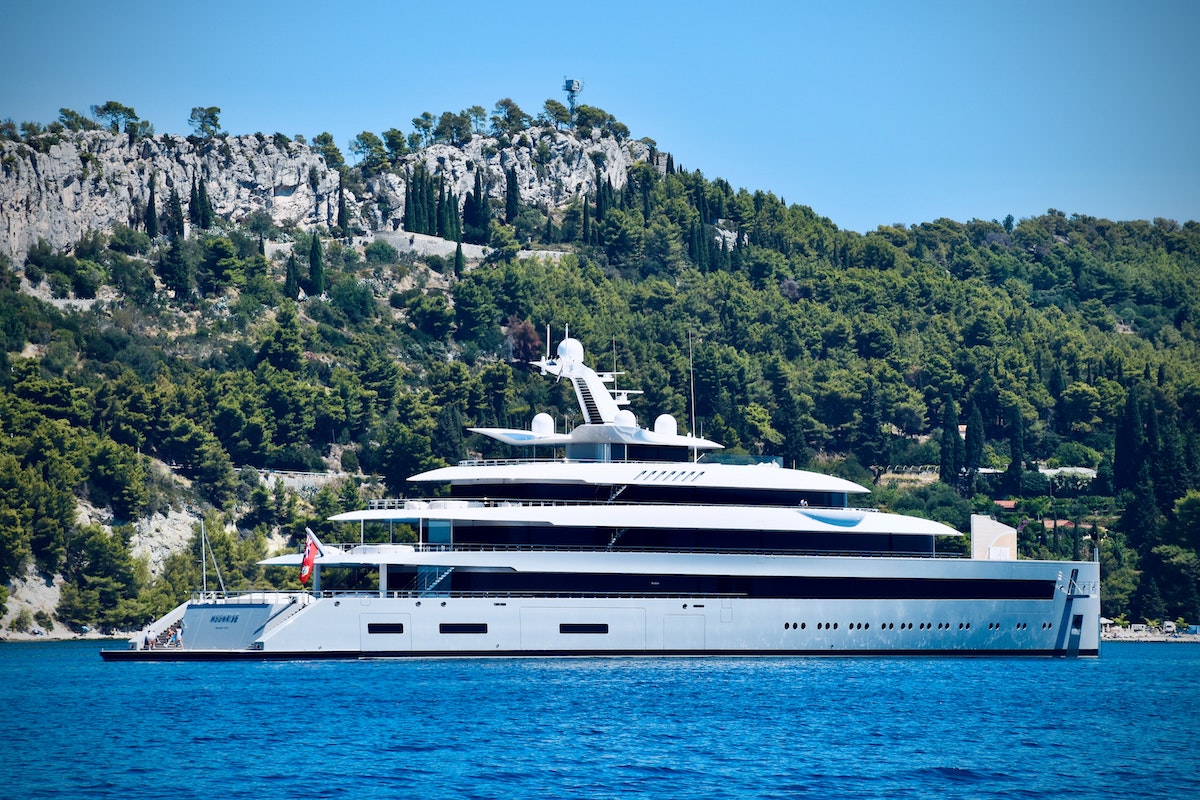
American workers are now more poorly positioned than they’ve been in nearly half a century, while superyacht and private island sales surge. (Arno Senoner / Unsplash)
The soft opening of the Omicron BA.2 variant notwithstanding, world governments seem to have collectively decided that it’s officially time for restrictions — and protections — to end. In the United States, the Centers for Disease Control and Prevention recently eased mask enforcement while the moratorium on student loan repayment is set to expire on May 1. New York City mayor Eric Adams, who has also supported ending restrictions, recently slob-shamed remote workers for opting to “stay home in your pajamas all day” instead of getting back to the office and “cross-pollinating ideas.” In Seattle, where I live, the city council rejected the efforts of socialist councilwoman Kshama Sawant to extend the eviction moratorium.
But as we prepare, yet again, to return to what we are led to believe will be a state of normalcy at last, Americans are more poorly positioned than we have been in nearly fifty years. By almost every measure — inflation, wages, medical expenses, student debt, rent, transportation costs — we are struggling. We are paying more for necessities and experiencing deepening immiseration while corporate profits are higher than they’ve been in nearly a century.
Some of the increased burden can be attributed to the pandemic as well as to supply chain problems and inflation. However, the most significant source of Americans’ current difficulties is that corporations, emboldened by the long decline of consumer protections and the functional indifference of most Democratic (never mind hyper-reactionary Republican) leaders to economic inequality, have opportunistically raised prices.