Henriette Roland Holst Was a Poet and a Revolutionary
Dutch poet Henriette Roland Holst was twice nominated for the Nobel Prize in Literature — but also made her name theorizing the mass strike. Her life shows how a generation of militants linked revolution in the arts to the fight for a socialist future.
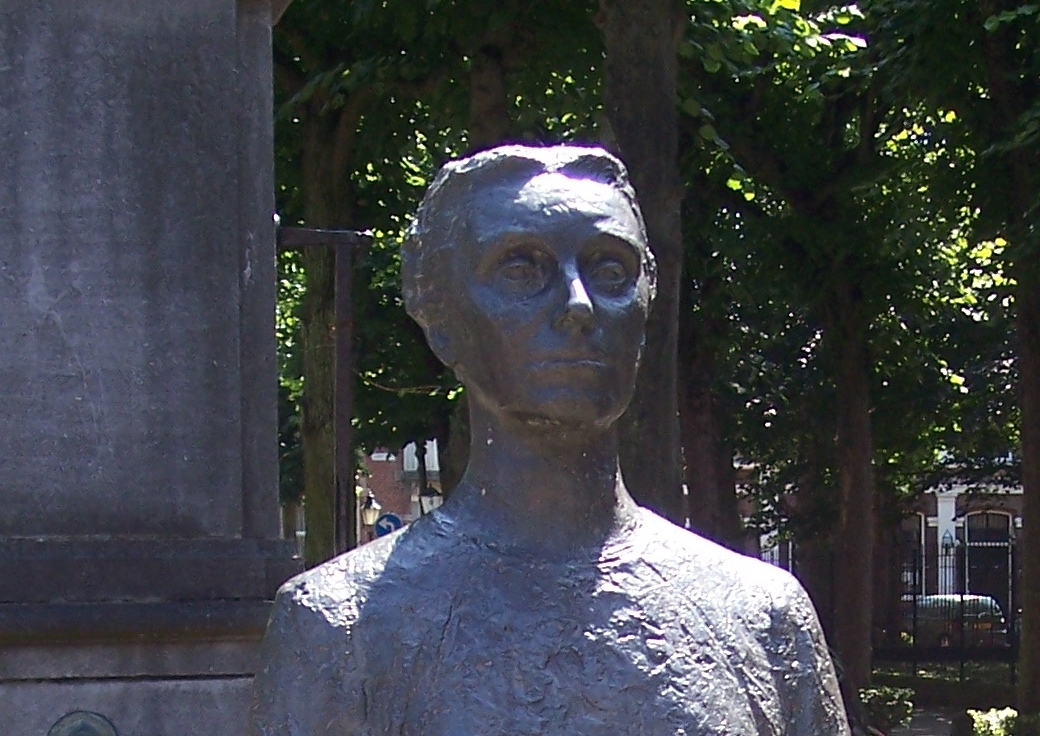
A bust of Henriette Roland Holst in Lindenplein, Noordwijk, the Netherlands. (Richardkw / Wikimedia Commons)
On November 11, 1918, hours after Germany’s capitulation in World War I and the flight of the kaiser, the leader of the Dutch Social Democratic Workers’ Party (Sociaal-Democratische Arbeiderspartij, SDAP) declared revolution in the Netherlands. It did not take him more than a few days to admit that this had been a mistake. The Netherlands had been neutral in the war, but the working class was hit hard by food shortages and lack of housing. This made for a grim and restless mood but not one in which the world revolution played any part — as shown by the lack of response to this declaration, outside of intellectual and activist circles.
Not everyone was ready to give up on the idea of a Dutch revolution. In the days following the armistice, a well-to-do middle-aged woman — an acclaimed poet by the name of Henriette Roland Holst — traveled from barracks to barracks trying to stir the soldiers up into rebellion. When a march to the seat of the national military in Amsterdam was quickly turning into a bloodbath, she kept on advancing. With her calm hoarse voice, she urged the soldiers — who held her at gunpoint — to switch sides. They did not, and neither did the Dutch proletariat rise up to seize the means of production. The next morning they went back to their jobs and their kitchens, trying to survive another cold day with too little food. “A bitter shame,” Henriette Roland Holst wrote from her comfortable country home.
The woman known as HRH led a remarkably interesting life, even by the standards of the remarkably interesting early twentieth century. Her contemporaries deemed her one of the greatest poets of all time. An influential player in international leftist politics and close friend of Rosa Luxemburg, Karl Kautsky, and Leon Trotsky, HRH was twice nominated for the Nobel Prize in Literature. Yet even just a decade after her death in 1952, she seemed all but forgotten — her poetry often dismissed as sloppy pamphleteering, her political career unremarked upon. Reading her life story makes you wonder why she hasn’t been part of the feminist effort to pull great historic women out of oblivion. For we can learn a lot from HRH’s triumphs and failures — in poetry as in politics.