We Can Move Beyond Political Polarization Through a Working-Class Economic Agenda
US politics have become hyperpolarized along partisan lines. But they don’t have to be. Millions of Americans worry more about paying the rent or medical bills than what’s on cable news. They can be won over by a working-class economic agenda.
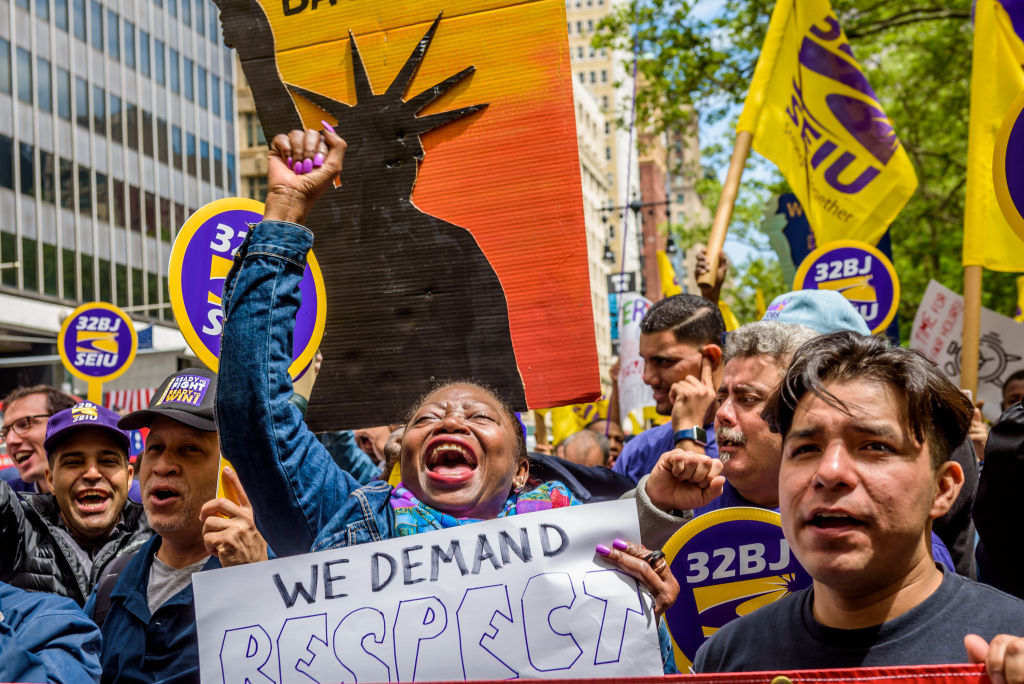
We can build a multiracial working-class coalition organized around the issues important to working people. (Erik McGregor / LightRocket via Getty Images)
Are working-class voters in America polarized? It sure looks like it. In Virginia, a mother threatens to bring loaded weapons to her child’s school to stop a mask mandate, and the new governor institutes a tip line to report any school official teaching something “divisive.” Texas also has a tip line, with cash rewards to anyone reporting an abortion or intent to get an abortion. Local election officials fear for their lives. Armed white supremacist militias are the biggest domestic terrorism threat facing the country, according to the US Department of Justice.
A Carnegie Endowment for International Peace study points to the corrosive effects of polarization on politicians and institutions, and finds these divides extend far beyond the corridors of power, as “polarization at the mass level is pushing Americans across the country to divide themselves into distinct and mutually exclusive political camps.”
But we’re not there yet. There are millions of working-class Americans who worry more about paying the rent or getting a medical bill than what’s on cable news. Many of them hold no strong allegiance to a political camp and are potentially persuadable voters. A recent Pew study identifies 15 percent of the public as “stressed sideliners” and another 12 percent as “ambivalent right.”