In 1972, Britain’s Miners Showed the Power of the Working Class
Fifty years ago today, British miners concluded a national strike after defeating their Conservative government. The 1972 victory opened up a decade of working-class radicalism, before Margaret Thatcher’s counterrevolution crippled organized labor.
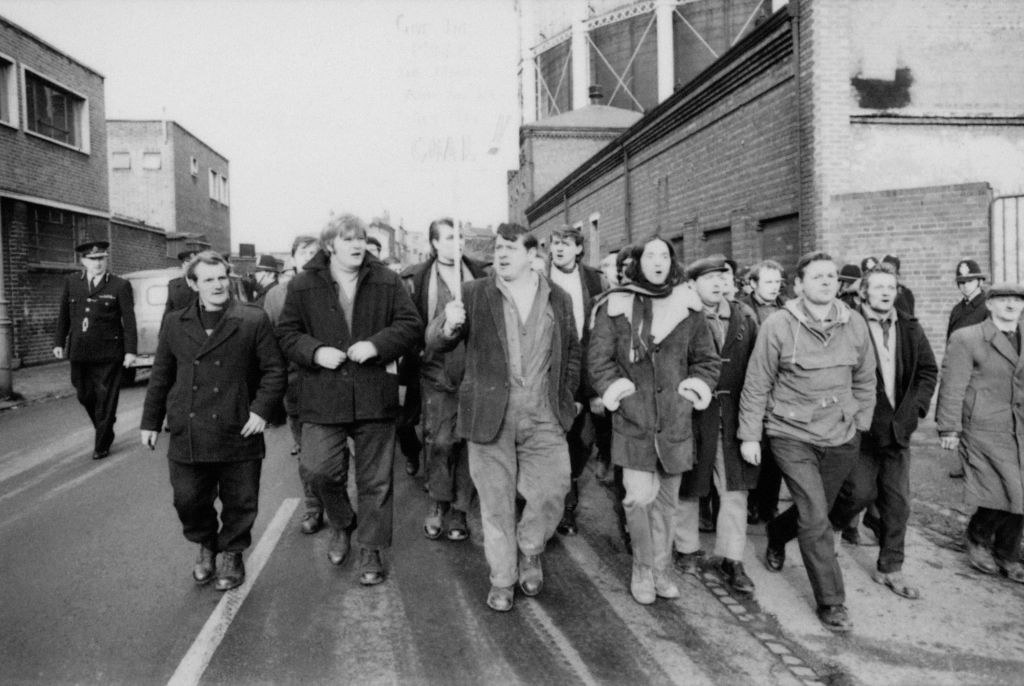
Miners at Saltley Coke works close down the depot during their strike in February, 1972. (PA Images via Getty Images)
The British political lexicon presents the 1970s as a decade of economic disaster and political folly. These historical projections reached fever pitch when Jeremy Corbyn led the Labour Party between 2015 and 2019. Conservative politicians, right-wing newspapers, and even audience members on BBC panel shows conjured up images of recession, failing nationalized industries, and trade union power.
The myth of the 1970s tends to blur three moments into one: the power cuts as a result of the 1972 miners’ strike, the implementation of a three-day week by Edward Heath’s Conservative government during a subsequent coal dispute in 1974, and the spectacle of dead bodies lying unburied as rubbish piled up on British streets during the 1978–79 “Winter of Discontent.” The power of organized labor, whether in the form of industrial action or the bloc votes wielded by so-called union barons at Labour Party conferences, looms large in these stories.
We have to disentangle the 1972 miners’ strike from these hackneyed associations in order to understand Britain’s first national coal dispute since the 1926 general strike, when private coal owners had locked out the miners. The strike opened up a crucial phase in postwar British history, when it seemed as if working-class radicalism might transform the country’s social order.