Public Pension Funds Are Massive Investors in Fossil Fuels
California’s top investment funds have resisted divestment from fossil fuels and funneled big money into firms like those behind Dakota Access. Not only are these investments dirty, but they’re costing public workers billions in the process.
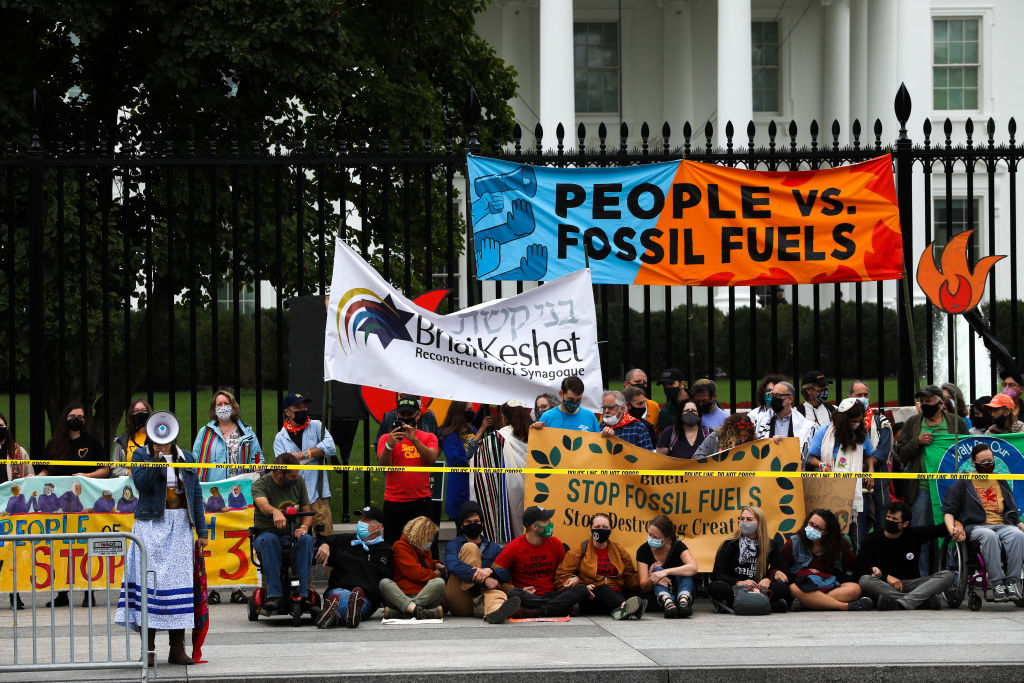
Hundreds of Native Americans and supporters protested the DAPL in front of the White House on October 12, 2021 in Washington DC. (Yasin Ozturk / Anadolu Agency via Getty Images)
California’s two biggest pension funds have invested a staggering $43 billion in fossil fuel companies, and their opposition to divesting from the industry — including fighting legislation that would have stopped them investing in firms involved with the controversial Dakota Access Pipeline (DAPL) — has cost retirees and taxpayers billions, research shows.
The findings hammer home the fact that the divestment movement isn’t just about protecting the planet from the worst effects of climate change. With the oil, gas, and coal industries all on the decline, pension funds’ refusal to divest from fossil fuels is also endangering the retirement savings of teachers, government employees, and other rank-and-file public workers who have paid into these funds.
For at least a decade, climate activists have been demanding that public sector pensions exit the fossil fuel sector. But the California Public Employees’ Retirement System (CalPERS) and the California State Teachers’ Retirement System (CalSTRS) — the largest investors in fossil fuels among the top pension funds in the United States, according to new research from Climate Safe Pensions Network and Stand.earth — have actively resisted public calls for divestment. Instead, the California funds have continued to plow retirees’ savings into fossil fuel investments, despite years of stagnant returns — while erroneously claiming that divesting from the industry could negatively affect returns for beneficiaries.