We Should Nationalize Tyson Foods
Meatpackers are colluding with each other to generate superprofits at the expense of everyone else. Nationalizing one of them isn't particularly radical — it's a commonsense policy solution.
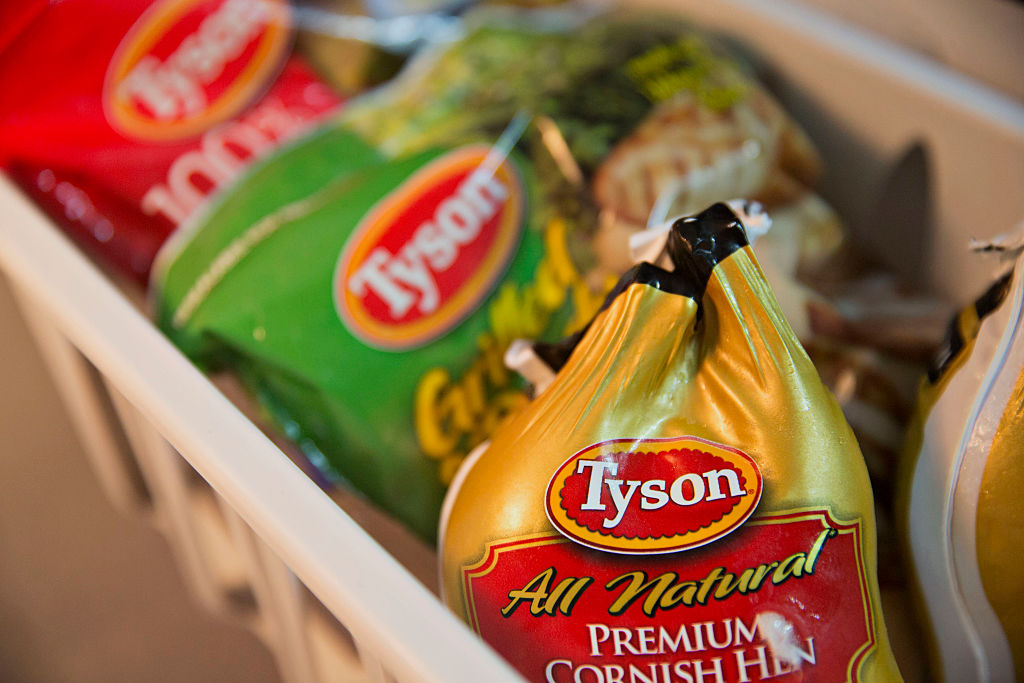
Nationalizing Tyson Foods would increase meatpacking competition and bust up collusion in a few months. (Daniel Acker / Bloomberg via Getty Images)
Yesterday, the Joe Biden administration announced that it was going to provide hundreds of millions of dollars to mom-and-pop meat processors via grants, loan guarantees, and reduced inspection fees. The idea behind this splash of money is to promote competition in the meatpacking industry and ultimately achieve a redistribution of money from meatpackers to farmers, in the form of higher prices, and consumers, in the form of lower prices.
Four large meat-packing companies control 85 percent of the beef market. In poultry, the top four processing firms control 54 percent of the market. And in pork, the top four processing firms control about 70 percent of the market. The meatpackers and processors buy from farmers and sell to retailers like grocery stores, making them a key bottleneck in the food supply chain.
When dominant middlemen control so much of the supply chain, they can increase their own profits at the expense of both farmers — who make less — and consumers — who pay more.
The explanation of the problem makes a lot of sense. On its journey to the consumer, meat starts with a farmer, travels through a meatpacker, and then finds its way to a retail store. If the meatpacking part of the value chain is clamped down by a few players that are colluding with one another, they can grab an outsize share of the meat revenue.