For Murdered Honduran Organizer Berta Cáceres, “Any Injustice Was Her Battle”
Honduran activist Berta Cáceres was murdered in 2016 during a fight against a hydroelectric megaproject. In a Honduras characterized by corruption and impunity after the 2009 US-backed coup, the murder was the grand finale of a campaign of terror and violence against activists like Cáceres.
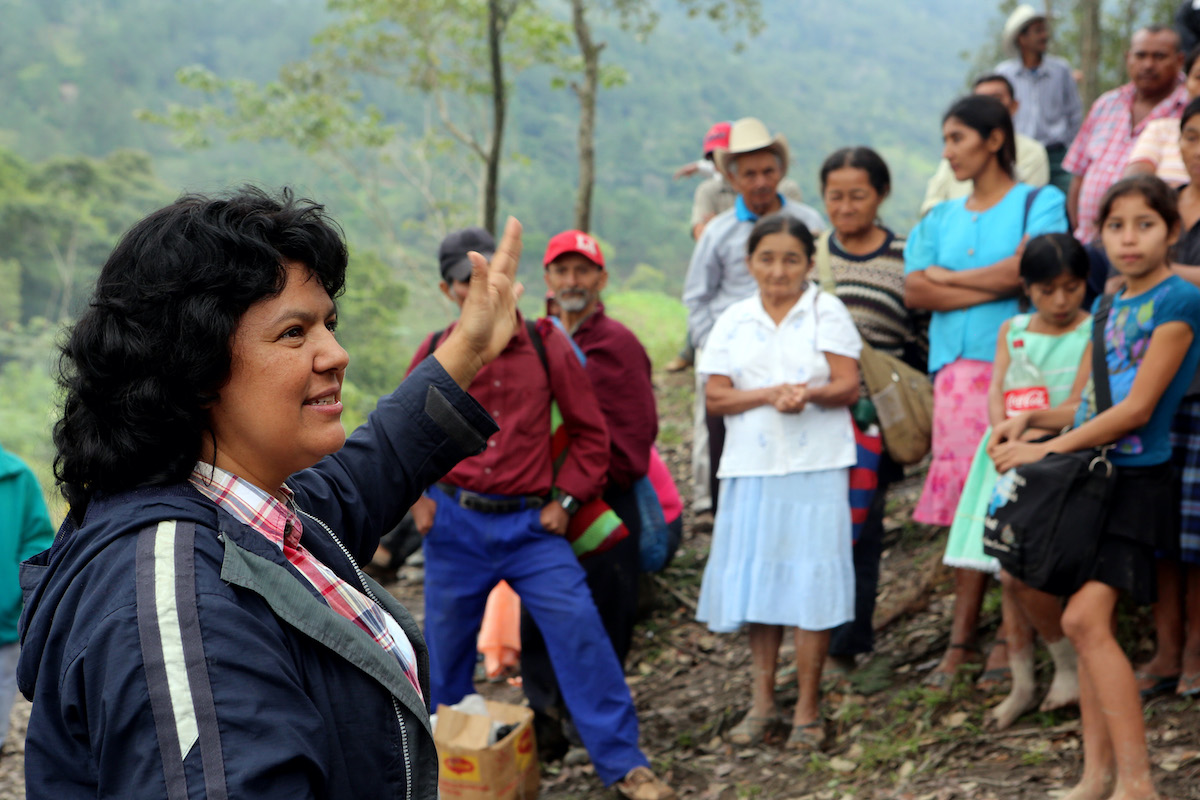
Berta Cáceres in the Rio Blanco region of western Honduras, where she, COPINH (the Council of Popular and Indigenous Organizations of Honduras) and the people of Rio Blanco organized to halt construction on the Agua Zarca Hydroelectric project. Photo courtesy Goldman Environmental Prize
The March 2, 2016 assassination of venerated Honduran social movement leader Berta Cáceres sent shockwaves around the world. In her new book Who Killed Berta Cáceres? Dams, Death Squads, and an Indigenous Defender’s Battle for the Planet, journalist Nina Lakhani describes the fraught process that led, two years later, to the conviction of seven men for the murder and the ongoing struggle for justice.
In this interview with Hilary Goodfriend, copublished by NACLA and Jacobin, Lakhani discusses the structural context for the violence in Honduras, the fight against impunity for Cáceres’s killers, and her legacy.
Hilary Goodfriend
Berta Cáceres is internationally celebrated as an environmental activist or an indigenous land defender. But as your book makes clear, Berta’s organizing extended into multiple spheres, from leadership in Honduras’s post-coup resistance to deconstructing patriarchal oppression within her organization, the Council of Popular and Indigenous Organizations of Honduras (COPINH).
Nina Lakhani