Yes, Social Media Can Help With Real-World Organizing
We can’t change the world just by posting on social media. But as the 2018 red state teachers’ strikes show, if organizers make strategic choices about their online organizing, social media can be used to build mass militant actions like strikes.
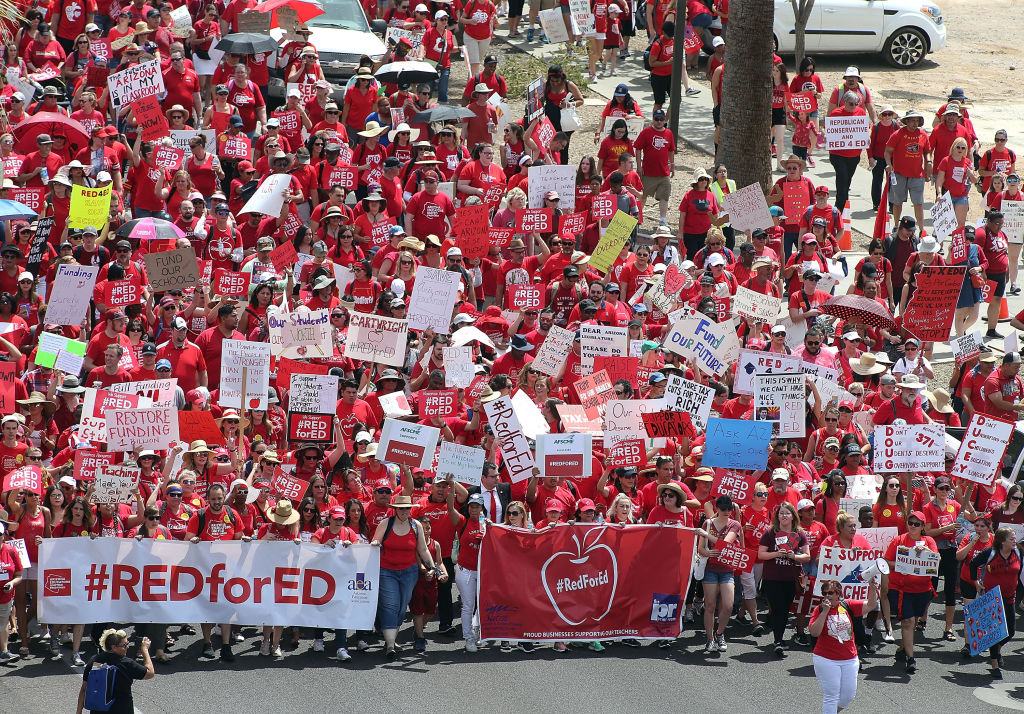
Striking Arizona teachers march through downtown Phoenix on their way to the Arizona State Capitol on April 26, 2018. (Ralph Freso / Getty Images)
In the wake of the 2011 uprisings from Tahrir Square to Zuccotti Park, pundits declared that “the revolution will be tweeted.” Very online leftists calling for a new general strike over Twitter every few months aside, this techno-utopian faith in the unprecedented movement-building powers of new information and communication technologies like social media has given way, in many corners, to pessimism. Digital activism, we are now told, leads to online echo chambers and systematically bolsters right-wing forces.
The problem with most of these arguments is that they assume that digital tools will necessarily have a certain type of impact on politics. But this technological determinism overlooks a crucial fact: what matters is not just how much social media is being used by social movements but how it is being used.
To explore these dynamics, I studied the 2018 educators’ strikes in Oklahoma and Arizona, first as an on-the-ground researcher, then by interviewing leaders and participants, and finally by systematically analyzing the contents of the viral Facebook groups educators used to build these unprecedented mobilizations. What I found surprised me about how these tools were used to build these strikes — and forced me to adjust some of my basic assumptions about what effective labor organizing looks like.