At the White Cliffs of Dover, Shipping Giants Are Paying Below Minimum Wage
Just 25 miles across the English Channel from France, Dover is one of Europe’s most important ports. Yet massive outsourcing has allowed shipping giants to evade British labor law, putting passengers in the hands of underpaid, overworked agency staff.
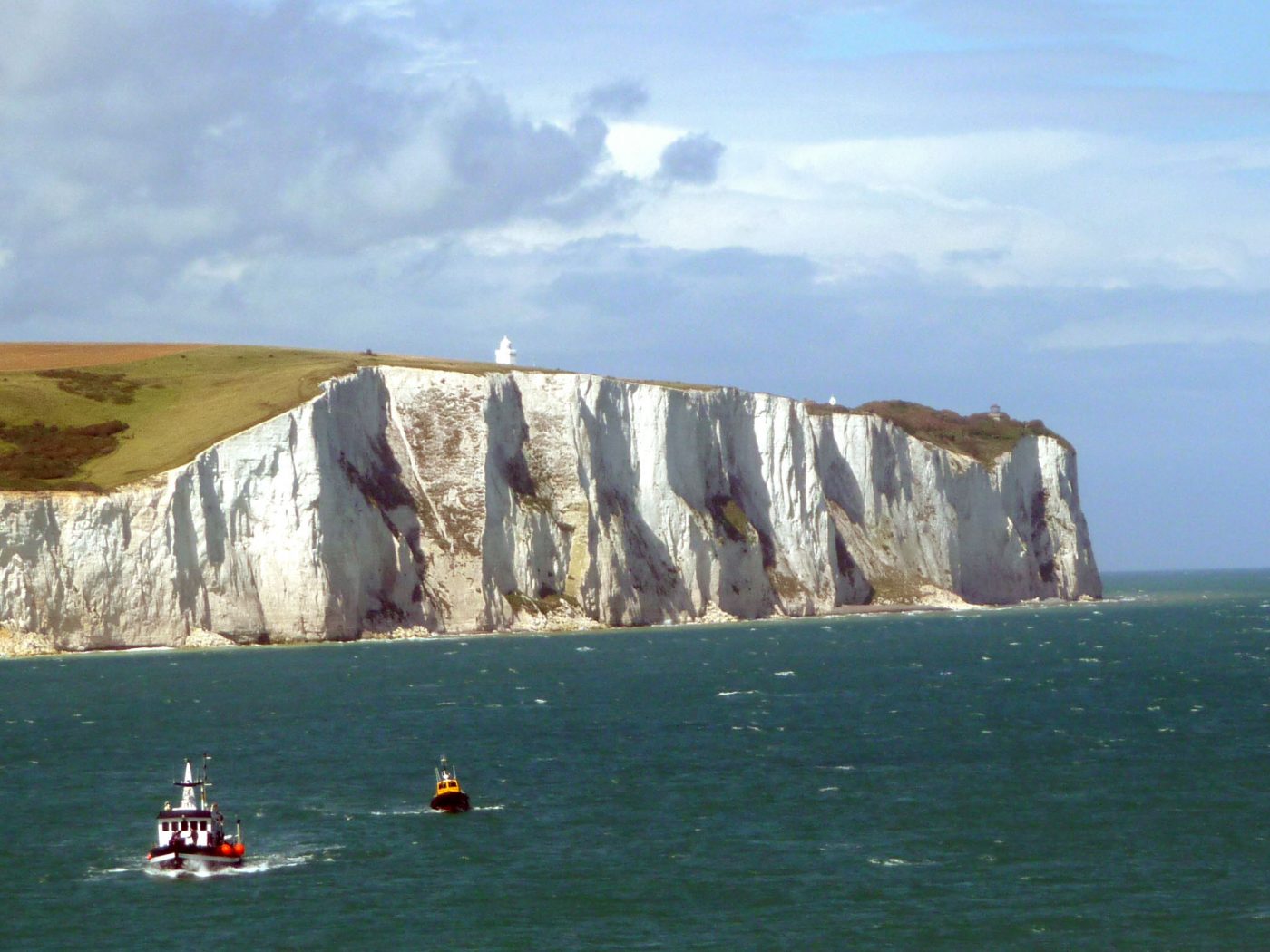
The White Cliffs of Dover. Immanuel Giel / Wikimedia Commons
Dover is famed around the world for its “white cliffs,” but most important to locals’ livelihoods is its port, twenty-five miles across the water from France. One of the busiest such hubs in Europe, it supports around 22,000 jobs, handling 13 million passengers, 2.5 million freight vehicles, and £100 billion of UK-European trade annually. But with new business practices and the resulting industrial strife, the nature of the port economy is changing — along with the jobs it supports and its relation to the local community.
Much of the change owes to P&O, today Dubai-owned but until 2006 a British shipping and logistics giant. One of the most longstanding ferry operators in the Port of Dover, the firm is a household name in Britain. But in recent times it has enacted a wave of redundancies, 670 in Dover last June alone. During this round of layoffs — spurred by reduced traffic due to pandemic-era travel restrictions — P&O announced its intention to retire the Pride of Burgundy and reduce its overall operation by three vessels.
With the arrival of Irish Ferries threatening its market share, P&O brought the vessel back. After redundancies, it turned to an agency crew — meaning the staff would not be hired in-house by P&O, but by a recruiter paid by the shipping giant to source staff.