Dysfunction Is Central to the Basic Functioning of American Society
Pandemic measures like the stimulus temporarily helped and empowered working-class and vulnerable people. And that’s quickly becoming a problem for an economy based on their hyper-exploitation.
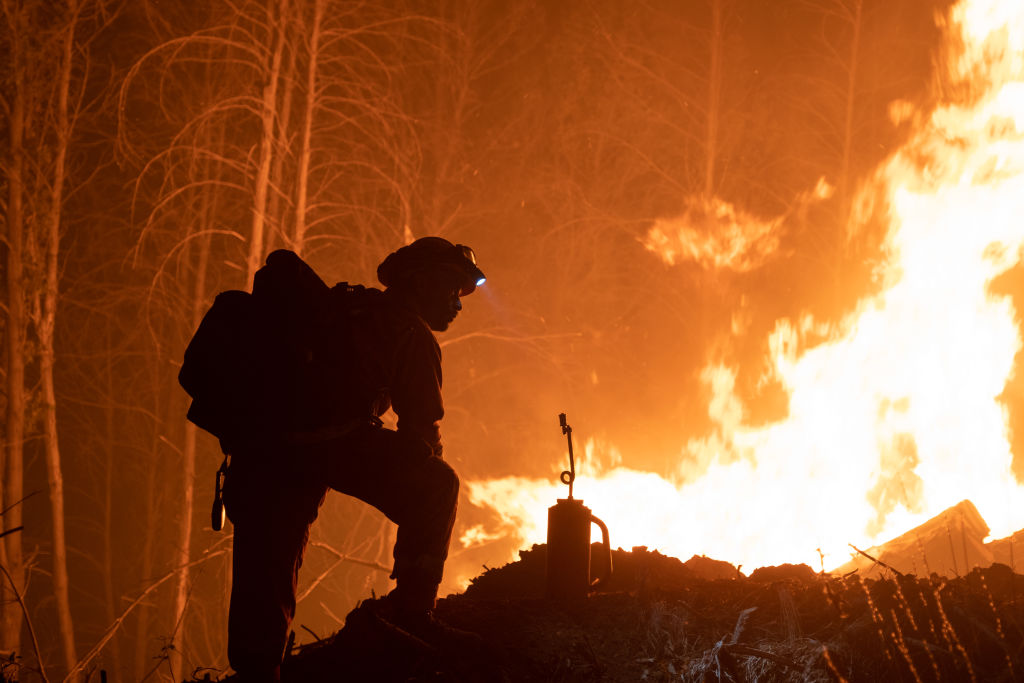
California’s release of prisoners during the pandemic created a shortage of inmate firefighters, who are paid only a few dollars a day, to deal with some of the worst wildfires the state had ever seen. (David Odisho / Bloomberg via Getty Images)
Compared with most other advanced capitalist countries, the United States is a mess. Our archaic eighteenth-century constitution ensures legislative gridlock and empowers small minorities to block democratic will. Our health care system leaves tens of thousands to die every year because they can’t afford treatment, as millions more forego necessary care because of the cost. Three hundred million privately owned firearms are in circulation nationwide, perpetuating a continuous public health crisis that simply would not be tolerated in other rich democracies.
In left-of-center circles, American dysfunctionality is widely acknowledged. What’s less well understood is how American society has adapted to that dysfunctionality, and indeed built its institutions on a foundation of pervasive state and market failure.
This adaptation has been revealed with particular clarity by the COVID-19 pandemic. The US policy response to the pandemic has hardly been perfect, but it has at times demonstrated what a functioning state in an advanced capitalist society could look like. In the process, it has inadvertently sent various systems into a tailspin.