Squid Game’s Strike Flashbacks Were Modeled on Our Real-Life Factory Occupation
- Kap Seol
Squid Game’s director says he was inspired by the 2009 Ssangyong Motor strike undertaken by me and my coworkers. Now millions around the world have glimpsed our struggle — but it’s far from over, and our wounds have not healed.
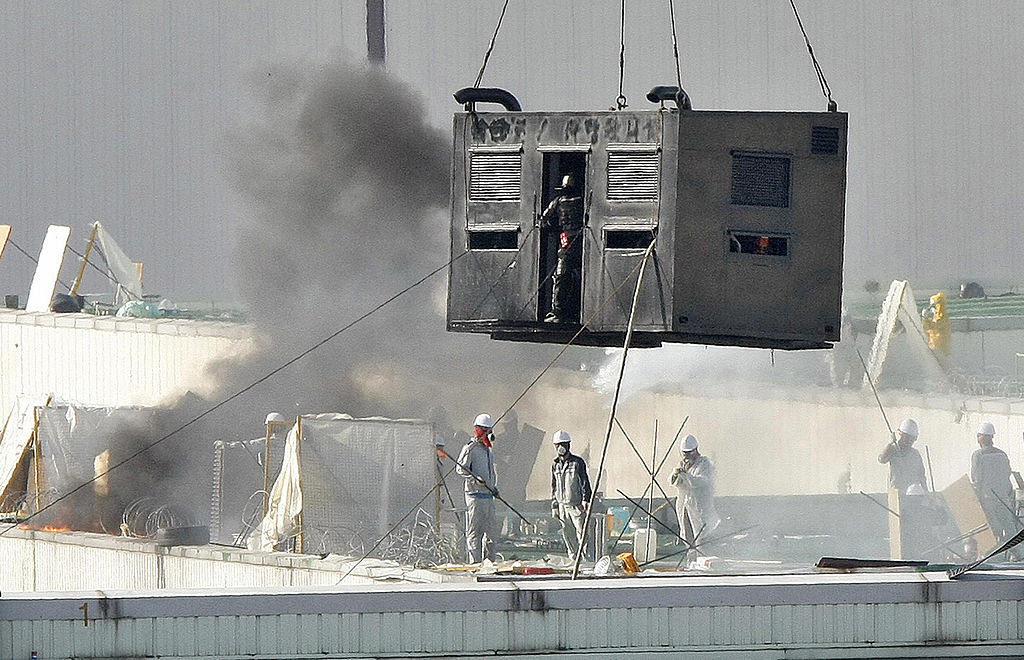
Riot police in a container try to climb onto the roof of a plant occupied by striking workers at Ssangyong Motor in Pyeongtaek, South Korea, on August 5, 2009. (Kim Jae-myoung / AFP via Getty Images)
Amid August heatwaves, yellow tear-gas liquid cascaded down on us from the sky. Swooping police choppers whipped up wind sufficient to pull umbrellas from our feeble hands. Riot police scaled the factory fences like invading cockroaches. Armed police commands fired rubber bullets and stormed the rooftop of the factory from freight containers pulled up by giant cranes. They brandished their clubs over our heads as they chased us. Police were trampling us, beating us, and continuing to beat us even after we fell unconscious. We were flipping and tumbling like origami in the ddakji game that a mysterious recruiter used to attract contestants in Squid Game.
The ear-piercing noise of the swooping choppers drowned out our screams, depriving us of even the right to cry. For how long were we beaten? Workers fell on the rooftop like dried squids. Smoke from burning tires was billowing everywhere, thickening the air, like we were in a warzone. Outside the plant, families and supporters stomped in anger and frustration. They made ferocious, but vain, attempts to charge the police cordon until the line of human shields became a wailing wall.
Sharing or Halving
In August 2009, after the brutal suppression of the strike at my employer Ssangyong Motor, about ninety-four workers were jailed and 230 were prosecuted. To date, more than thirty workers and family members are dead by their own hands or from conditions related to the trauma they endured.