Novelist Almudena Grandes Told the Truth About the Spanish Dictatorship
Spanish author Almudena Grandes, who died on Saturday, aged 61, was famed for her novels portraying ordinary Spaniards’ experience of civil war and dictatorship. Against attempts to veil the past in silence, she insisted that unearthing historical memory was fundamental to building a democratic Spain.
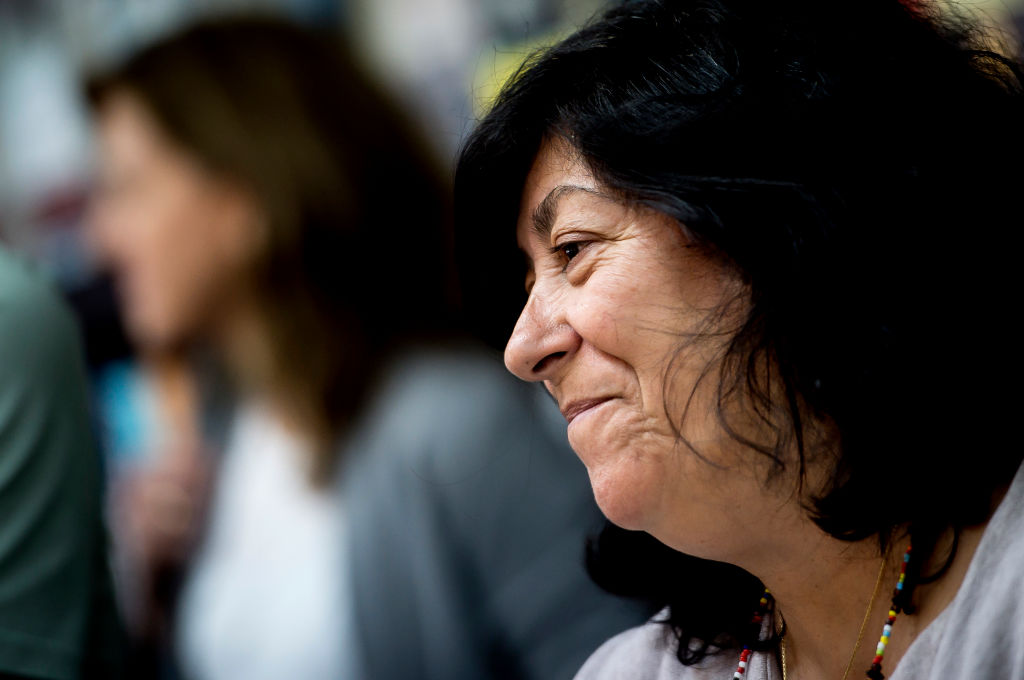
Almudena Grandes (1960–2021) attends the Madrid Book Fair in 2018. (Samuel de Roman / Getty Images)
Almudena Grandes, who died on Saturday, aged 61, did more than any novelist of her generation to change the way her country relates to its twentieth-century past.
Born in 1960 in Madrid, she first made a name for herself in 1989 with an erotic novel, Las edades de Lulú (The Ages of Lulú), which inspired a film of the same name, directed by Bigas Luna and starring Francesca Neri and a young Javier Bardem. Her following novels, including the 760-page Malena es un nombre de tango (Malena Is the Name of a Tango) confirmed her status as a best-selling author of door-stopping, plot-driven page-turners.
But Grandes really came into her own as a novelist with her historically themed novels revisiting the years of the Second Republic (1931–39), the Civil War (1936–39), and the Franco dictatorship (1939–1975), with a focus on regular people involved in difficult political struggles. The first of these works, El corazón helado (The Frozen Heart) came out in 2007. The novel Inés o la alegría (Inés or Happiness), from 2010, was announced as the first in an ambitious series, Episodes of a Never-Ending War, inspired by a legendary series of historical novels penned by the nineteenth-century literary giant Benito Pérez Galdós. By the time Grandes died, she had published five of the planned six novels in the series, which together have sold 1.3 million copies to date.