Workers in Atlantic Canada Face Down Austerity
In New Brunswick, 22,000 public-sector workers are struggling against austerity measures put in place by Tory premier Blaine Higgs. His actions are a portent of the austerity measures to come in a post-COVID world.
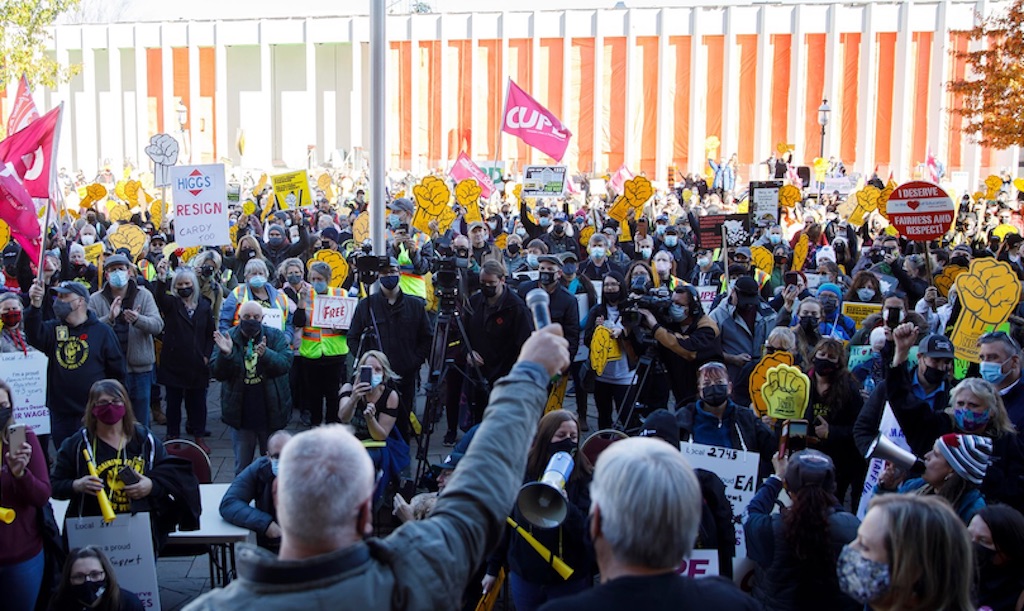
Thousands of union members and supporters rally outside the New Brunswick Legislature on November 2. (CUPE SCFP / Facebook)
In the face of new demands from bosses for wage cuts, and after twenty years of stagnant pay, workers in Atlantic Canada have had enough. In late October, twenty-two thousand Canadian Union of Public Employees (CUPE) members from ten locals in New Brunswick went on strike. With members working in schools, hospitals, rehabilitation and therapy facilities, courts, and other sectors, these workers represent a broad section of Canadian society.
Since the strike, the union’s members have tentatively returned to work, pending memorandums and a vote by education workers. But New Brunswick’s premier, Blaine Higgs, has been clear that more “changes” are planned. Higgs is a loyal servant of the province’s wealthiest family, which has spent decades helping undercut workers’ pay and benefits.
Premier Higgs’s attack on public-sector workers offers a forewarning of what workers across Canada can expect in the near future. To combat these threats, they must organize now to fend off inevitable post-COVID austerity measures.