The Labor Beat Is Dead — Long Live the Labor Beat
When the labor movement collapsed, labor journalism collapsed with it. Today labor journalism is making a curious comeback. But without a truly revived labor movement, the labor beat will remain marginal to big media.
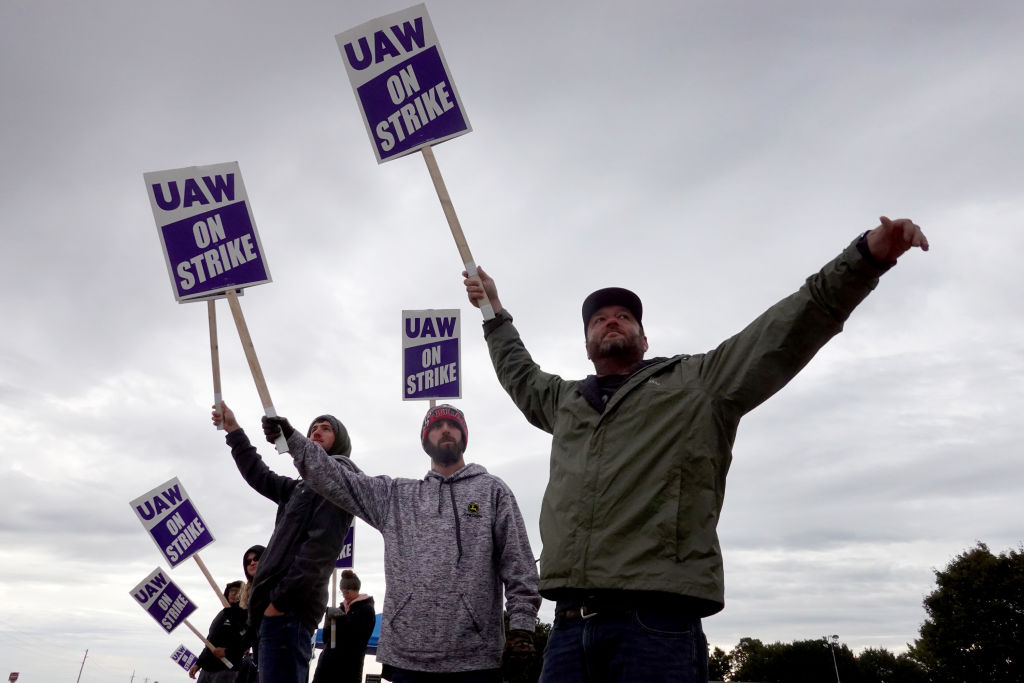
Striking workers picket outside the John Deere Davenport Works facility in Iowa, October 15, 2021. (Scott Olson / Getty Images)
In his latest column, the New York Times’ Ben Smith looks into “Why the Media Loves Labor Now.” There’s been a lot of talk like this lately, and Smith includes labor reporters’ views on the uptick in labor-friendly coverage. (It must be mentioned that Smith himself was a labor story not so long ago, when, in his role as editor-in-chief of Buzzfeed News, he resisted an organizing effort, including no-showing at a scheduled meeting with the union.)
Said journalists have mixed feelings. It is true that Steven Greenhouse, who was the Times’ sole full-time labor reporter in the early 2000s, is no longer quite as alone as he was in that era. Back then, declining advertising revenue led to newsroom layoffs, with labor reporters first on the chopping block, their beat perceived as stodgy, outdated, and ideologically in conflict with newspapers’ higher ups and advertisers.
Today, there are labor journalists at a range of publications, especially digital outlets, though daily papers still lag: Noam Scheiber has taken Greenhouse’s mantle at the Times, but other dailies still lack full-timers — many of those who cover the subject do so as part of economy or lifestyle or tech beats, with labor not considered a terrain of its own. As for television news: the less that is said the better.