A Battle Over Wine Labels Is Exposing Canada’s Support for Israeli Occupation
A Canadian wine enthusiast’s quest to uncover whether wines produced in Israeli settlements were being misleadingly labeled “Made in Israel” has set off a long legal battle. In the process, he has exposed Canada’s complicity in Israel’s occupation.
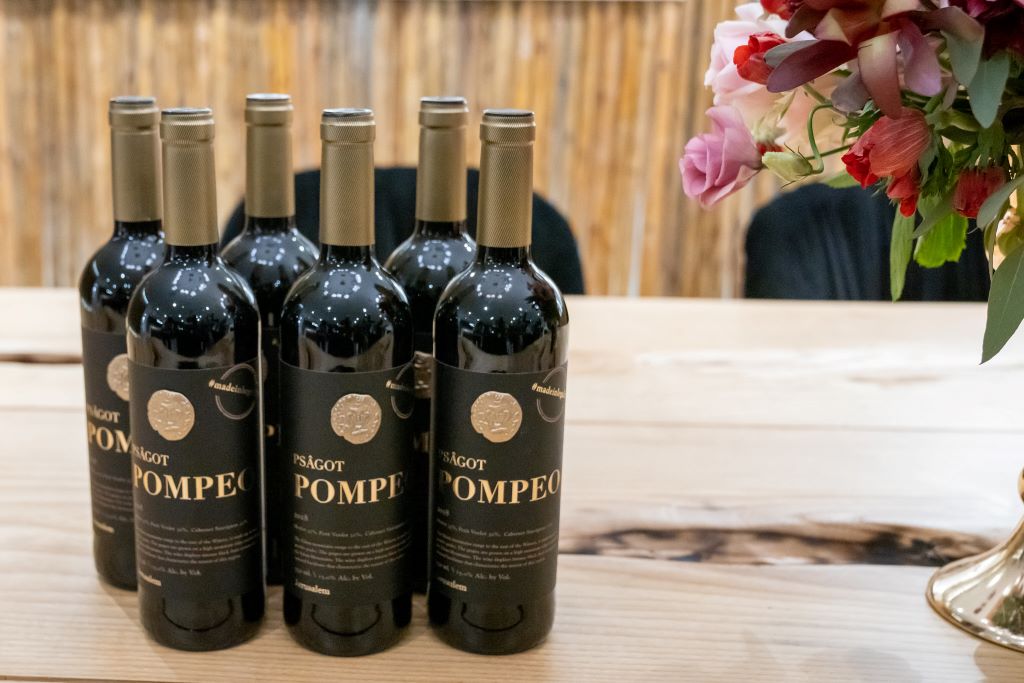
Bottles of wine from Psagot Winery, whose vineyards are located in occupied Palestinian territory, on display during a visit from US Secretary of State Mike Pompeo in November 2020. (Ron Przysucha / US State Department)
What’s on a wine bottle label? As it turns out, quite a lot. An incorrect or misleading label can run afoul of consumer protection laws or constitutionally enshrined rights to political expression.
In May 2021, Canada’s Federal Court of Appeal upheld a lower court’s decision that “Product of Israel” labels on wines produced in settlements in the West Bank are misleading to consumers. Consequently, the Canadian Food Inspection Agency (CFIA) must reexamine the rules stipulating how such wines should be labeled. The decision highlights inconsistencies in Canada’s foreign policy and trade relationship with Israel – and its commitment to international law.
In the spring, during the most recent spate of violence in the West Bank and Gaza, Canadian prime minister Justin Trudeau’s government reiterated its long-standing commitment to a two-state solution as the only viable option for peace. Trudeau has also expressed concern over Israel’s plans to effectively annex the West Bank. Now, because of the Federal Court of Appeal’s recent decision, Ottawa must publicly confront a glaring inconsistency in how it treats settlements in the occupied Palestinian territory in its trade and product labeling practices.