After Sixty Years, Canada’s New Democratic Party Must Embrace Class Struggle
NDP provincial governments have some achievements to their credit, but the party’s recent history has been a travesty of what its founders hoped for. Without a bold change of direction toward socialist politics, its future will consist of inexorable decline.
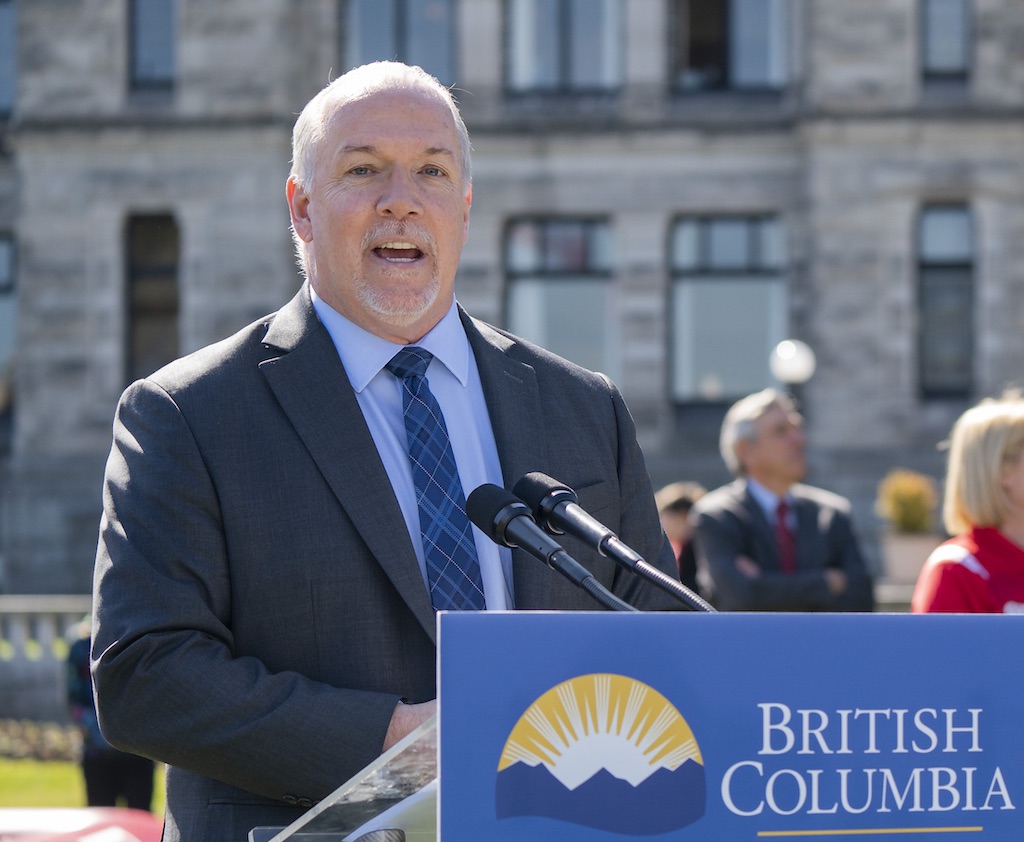
The rhetoric adopted by British Columbia premier John Horgan in the face of the pandemic and the recent heatwave is symptomatic of how far the NDP has moved away from its original approach to politics. (Rich Lam / World Rugby via Getty Images)
This week, the New Democratic Party (NDP) celebrates its sixtieth anniversary. It’s an opportunity to look back over the party’s history to see what it can still offer the Canadian left.
Although the NDP has always struggled at the national level, it has formed twenty-six provincial and territorial governments, including the current administration in British Columbia. As well as one-term governments in Nova Scotia (2009–2013), Ontario (1990–95), and Alberta (2015–19), it has also formed multi-term administrations in Manitoba, Saskatchewan, Yukon, and British Columbia.
At their best, NDP governments have implemented progressive policies that materially improved the lives of working Canadians. Too often, however, the party has acted as an ideological weather vane, embracing fiscal austerity and reactionary rhetoric while censuring (and occasionally purging) left-wing critics for undermining the supposedly “progressive” electoral option.