Fausto Gullo, Italy’s “Peasants’ Minister” Who Fought to Break Landowner Power
Italy's first postwar agriculture secretary, Fausto Gullo, was a Communist who used his office to redistribute land and give peasants control over their lives. His reforms promised to democratize the South's deeply unequal economy — only for conservatives to reassert the dead hand of landowner power.
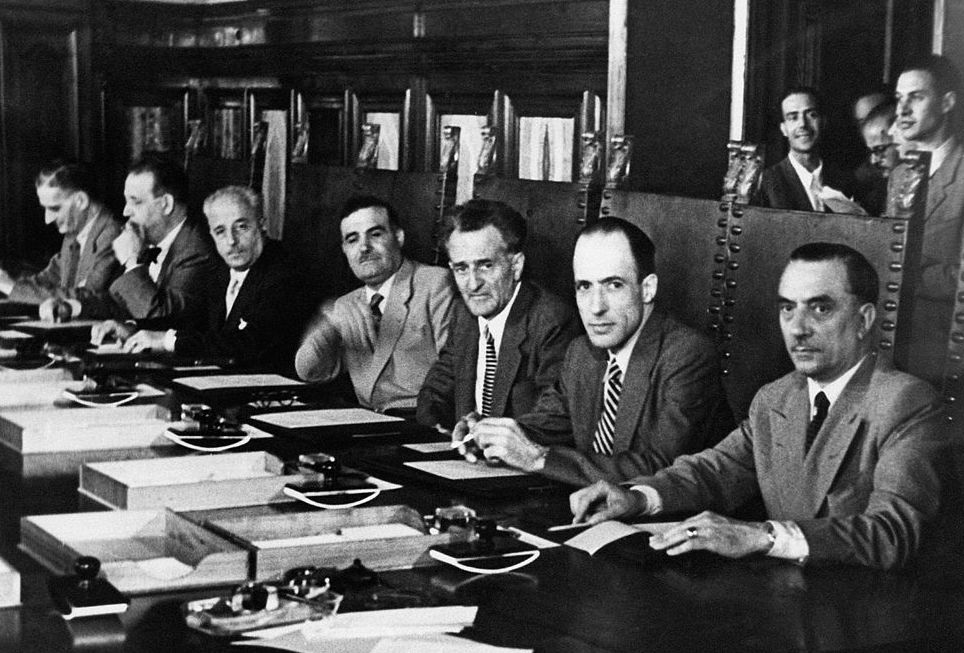
Fausto Gullo alongside fellow ministers in Rome, 1946. (Ivo Meldolesi / Mondadori via Getty Images)
Exactly seventy-five years ago — on July 1, 1946 — Italy’s dominant Christian Democratic party fired the immensely popular Fausto Gullo, known throughout Southern Italy as the “people’s lawyer.” Over the years, Gullo had represented many peasants in these so-called mezzogiorno regions pro bono. For two years starting in April 1944, he served in national government as a boldly reforming agriculture secretary.
Gullo was appointed to that role at the end of the Fascist era, as part of a short-lived coalition uniting the Christian Democrats (DC) with the Communists (PCI) and Socialists (the PSI). These parties had formed a resistance alliance against Benito Mussolini’s government and the Nazis, but after 1945 their relationship fragmented as the Cold War set in. The US administration wanted both workers’ parties out of government — and DC chief Alcide De Gasperi saw to it that this aim was carried out.
A high-profile member of the PCI, Gullo had served in World War I and during Mussolini’s rise to power earned a reputation as an activist and anti-fascist figure. Appointed agriculture secretary in 1944, he introduced what would go down in Italian history as “Gullo’s Reforms.” This series of decrees handed peasants thousands of acres of agricultural land, redistributed from wealthy absentee landlords whose families had often been gifted this massive acreage to lubricate the complicated deals that completed national unification in the 1860s.