BC Premier Dave Barrett Showed the Canadian Left How to Make Change Happen
Dave Barrett won a reputation as “Canada’s Allende” by carrying out radical reforms in 1970s British Columbia. Lifelong Canadian labor economist Andrew Jackson, who was part of Barrett’s project, recalls a turbulent and instructive time for the Canadian left.
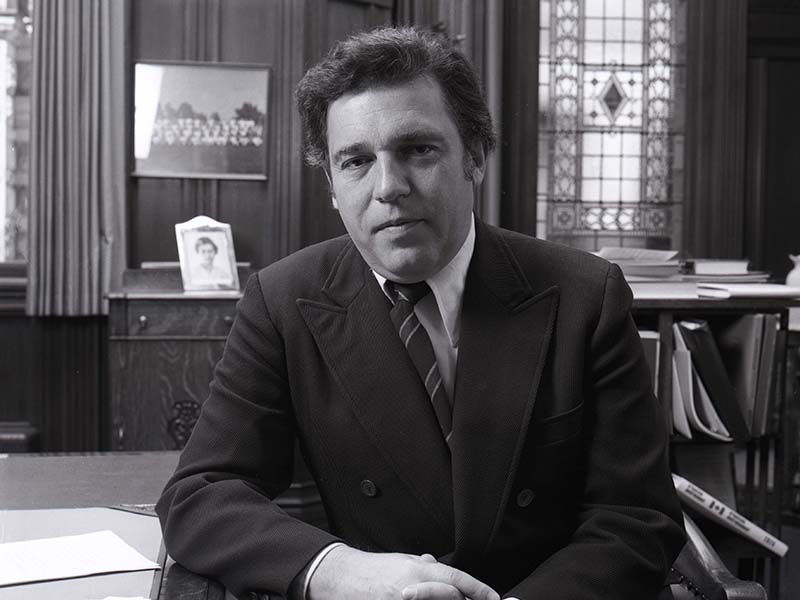
Dave Barrett can lay claim to having led the most radical and exciting government in Canadian history.
I abandoned academic work in 1979 to take a job with the British Columbia NDP caucus, partly because academic jobs seemed to be drying up, and partly because I wanted to engage more actively in politics. As a member of the small research group of the NDP caucus, I worked quite closely with a remarkable group of politicians. Many had been cabinet ministers in the Dave Barrett government of 1972 to 1975.
Famously dubbed “the Allende of the North” by Barron’s magazine, Barrett was at least as much a left-wing populist as a socialist. Barrett can lay claim to having led the most radical and exciting government in Canadian history. Elected in 1972 with a large majority of seats — but just 40 percent of the vote — Barrett’s was the first Co-operative Commonwealth Federation (CCF) or NDP government ever elected in the socially polarized, rough-and-tumble province of British Columbia.
This victory was the result of an unusual split between the right-wing parties. Their voters had traditionally united under one political banner of convenience to defeat the feared “socialist hordes” and contain the province’s traditionally strong and combative labor movement. Now division gave the BC NDP its chance.