People, Not “Voices” or “Bodies,” Make History
The “voice-giving” that is so central to the mission of liberal philanthropy underscores something essential about the custodial politics at the heart of the American political system. We need to do far more than “give voice to the voiceless" to win justice.
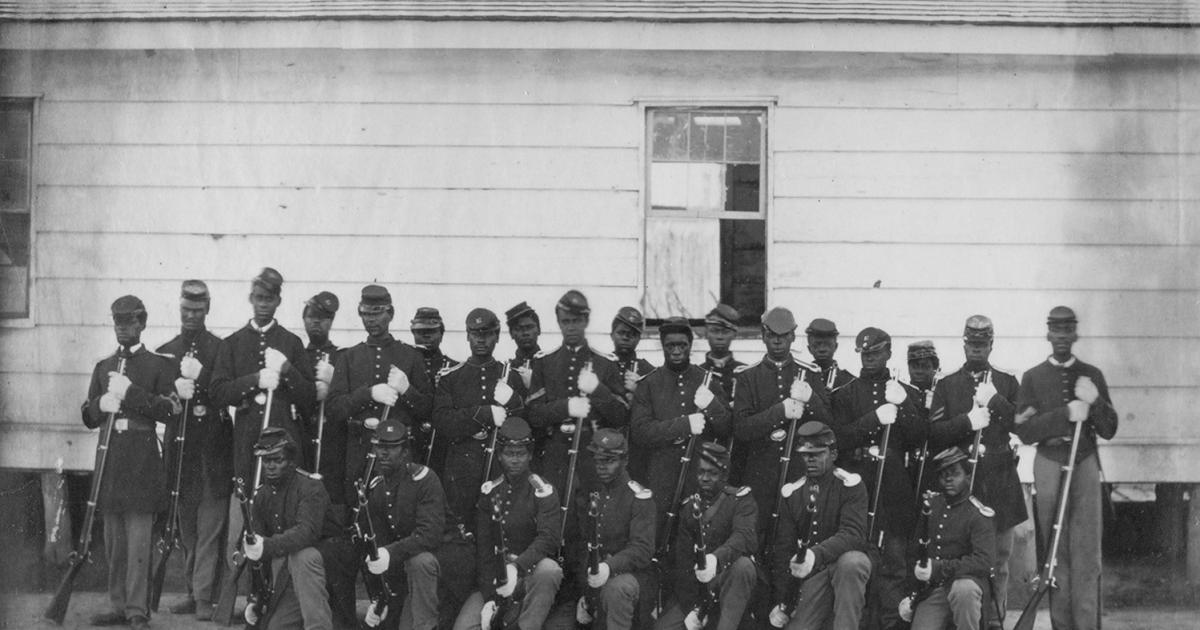
The 107th regiment of United States Colored Troops. (New York Public Library)
Today, we are virtually inundated with a phrase that seems at once neutral and unobjectionably positive: “to give voice.” Since the euphoric days of multiculturalism in the 1990s, giving voice to marginalized and vulnerable communities — often referred to as “the voiceless” — has become a mantra for thousands of nonprofits, philanthropies, and corporations.
Even earlier, the idiom took root in academia during the 1960s as part of a larger trend toward incorporating perspectives that had long been excluded from the venerable master narrative. The field of American history has benefited immensely from the new social history’s efforts to recover and incorporate previously ignored “voices” from the archives, resulting in dramatic and much-needed revisions of the past.
But rarely in the half-century of this seemingly democratizing march has anyone paused to interrogate the stock phrase that scaffolds so many of these scholarly and philanthropic endeavors. What does it really mean to “give voice to the voiceless”?