Mexico’s Left Faces a Tough Road Ahead
Mexico's midterm elections reflected left-wing president AMLO's high personal approval ratings — but also brought setbacks for his Morena party. If it's going to drive an enduring process of social change, Morena has to build a member-led organization firmly rooted in local communities.
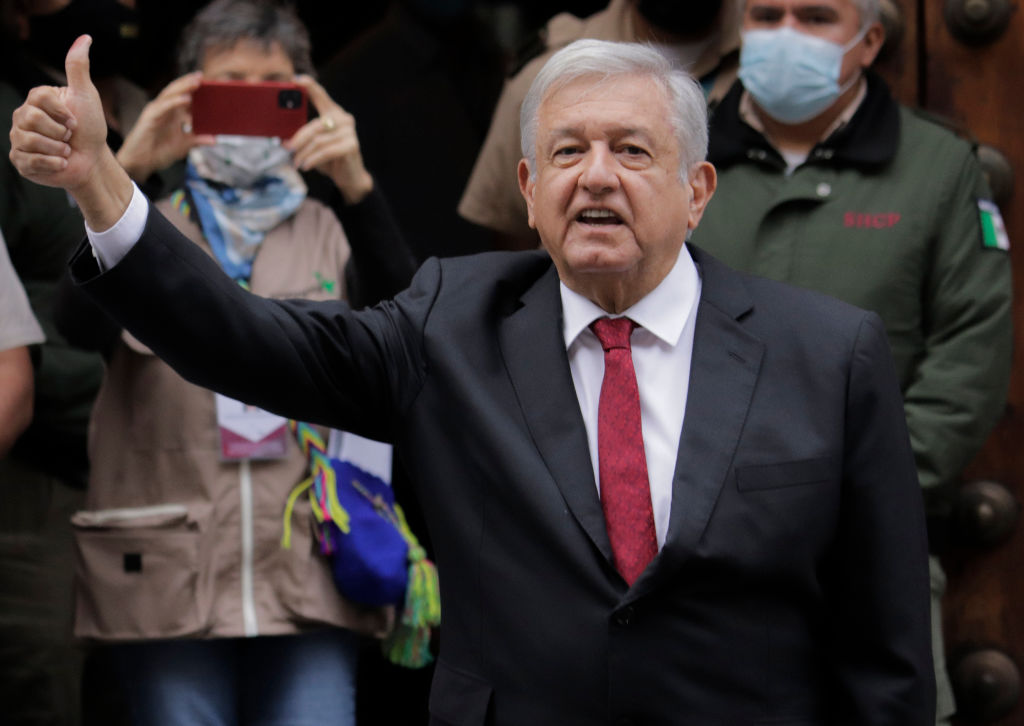
Andrés Manuel López Obrador, president of Mexico, raises his thumb in Mexico City, after casting his vote in the June 6 elections. (Gerardo Vieyra / NurPhoto via Getty Images)
Andrés Manuel López Obrador and his Fourth Transformation (4T) movement scored major victories throughout Mexico in the June 6 elections, obtaining a majority in Congress and winning more than two-thirds of governors’ races. At the same time, defeats in the local elections in the key Mexico City region signaled complications for the ongoing stability of AMLO’s left-wing government.
The election was considered a key test for the 4T coalition, today consisting of AMLO’s own National Regeneration Movement (Morena) the Labor Party (PT), and the Ecologist Green Party of Mexico (PVEM). It was set against the newly formed right-wing coalition Va por México (“It’s for Mexico”), which unites the long-dominant Institutional Revolutionary Party (PRI), the National Action Party (PAN), and the Party of Democratic Revolution (PRD).
4T’s main goal was to secure a majority in the federal congress in order to ensure stability for AMLO’s presidency and prevent a possible parliamentary coup by the right-wing opposition. At the same time, state- and city-level races also offered the opportunity to consolidate Morena as the country’s dominant political force.