You Shouldn’t Have to Survive a Terrorist Attack to Get Student Debt Relief
Marco Rubio has been hailed as an embodiment of some Republicans’ newfound economic populism. But his new student debt relief plan shows how much of a farce that all is: it pauses student loan payments for one year . . . for survivors of terrorist attacks.
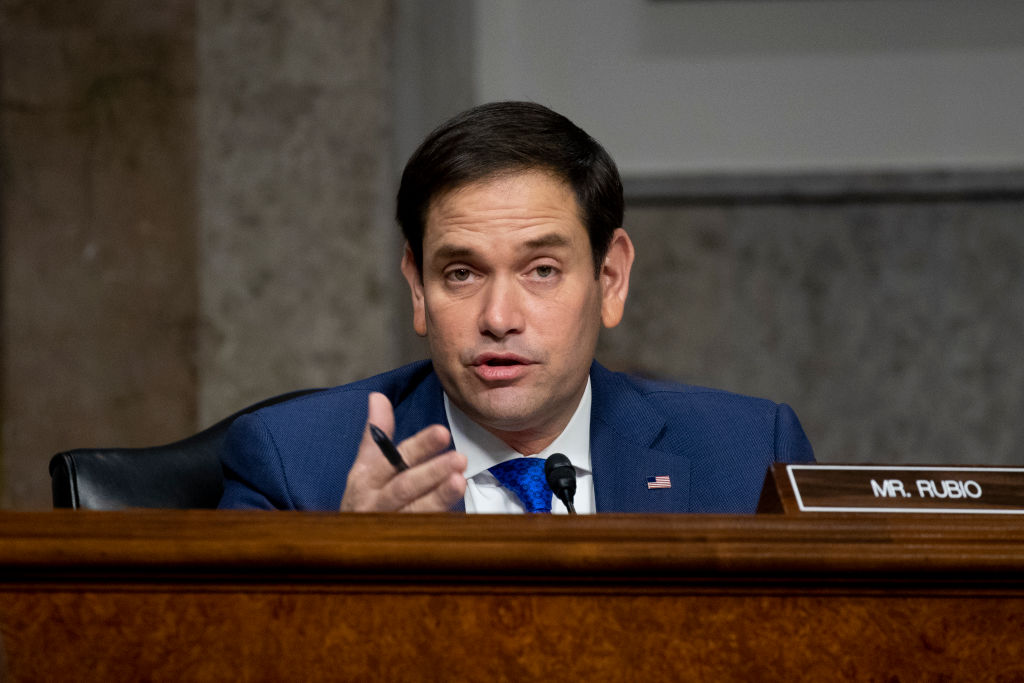
Sen. Marco Rubio (R-FL) speaks at a Senate hearing on Capitol Hill in Washington, DC. (Michael Reynolds / Getty Images)
Fox News this month called Florida senator Marco Rubio a “fervent supporter” of “populist politics.” The American Prospect identified him last month as a leading representative of something called “Republican Economic Populism.” Writing last year in the South Florida Sun-Sentinel, A. J. Kaufman claimed that Rubio has “been a fiscal populist for a while.”
But what exactly does any of this mean?
If “populism” refers to a rhetorical style rather than a policy platform, then Rubio counts as a populist. He often claims to represent the aspirations of the great mass of ordinary people who are misunderstood or despised by elites. But Richard Nixon and Ronald Reagan liked to talk that way too. So did consummate Democratic centrists Bill Clinton and Al Gore, who called their 1992 campaign book Putting People First. If that’s “populism,” then nearly everyone’s a populist.