The Australian Communist Author Who Lent His Voice to the Gurindji Strike
In 1966, Aboriginal stockmen, domestic workers, and their families at Wave Hill cattle station started a nine-year strike against work conditions that amounted to slavery. Frank Hardy, a communist author, helped the strikers tell their story to the world.
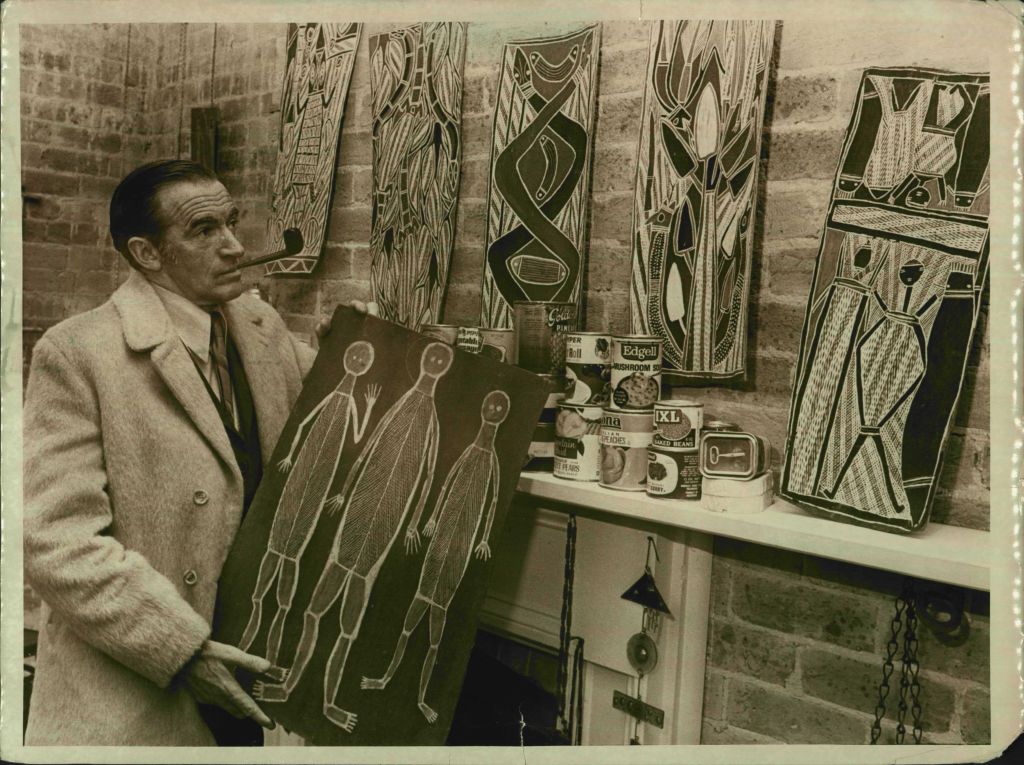
Communist author Frank Hardy exhibits Aboriginal art at the Rocks Gallery to benefit the Gurindji tribe in 1970. (John Patrick O’Gready/Fairfax Media via Getty Images).
Frank Hardy was a wiry man. In 1966, draped over the front bar of a Darwin pub, smoking his pipe, he cut a quintessentially Australian image.
Later known as the “stranger from Melbourne,” Hardy had hitchhiked north looking for the “real Australia” — or, at least, an Australia that could not be found in the urbane capital city he called home. He had found himself talking to some men who left the pub next door to avoid drinking with a group of Aboriginal men.
Hardy had intended to confront them — but they took the wind out of his sails by offering him a drink. Resigning himself to their company was another reminder that the collectively minded rural communities Hardy remembered from his childhood in western Victoria had vanished.